Showing posts with label Techniques. Show all posts

Tuesday, February 10, 2026

Baseline

 I'm excited about starting on the meds experiment! I think it's worthwhile to capture the baseline from which I hope to change. Of course, I've got the data!


Horizontal grid shows 10-pound differences. 
The blue line was my ideal weight, briefly achieved twice. 
The red line was my stable point after I started blogging, until I blew it.


Look at the picture of my weight loss history, starting back when I was a 35-year-old little girl going to Weight Watchers in a church basement for the first time. (You might need to go landscape on your phone.) The first Big Loss, more than 40 pounds at age 43, was done so easily. I followed, mostly, the Carbohydrate Addict's diet - very low carb most of the time, but not full Atkins. The second big loss, in perimenopause as I started this blog in 2010, was harder, but was pretty much the same eating pattern. Then, for several years, I white knuckled keeping the weight in bounds. I was in some of the best shape of my life, as I decided hitting "goal" was worth anything, I did - for a couple of days. Again, pretty much the same eating, more Atkins than not. Then, the classic rebound, and then I threw every habit and guideline out the window to go intuitive. I tuned in to myself, and myself wanted bread and pasta and ice cream. Since then, I've been trying to wrestle my weight back down, and things that used to work either don't work anymore or somehow have become too hard.

So here I am, relatively stable at a peak weight that I hate. It's about moving, and feeling, and spending so much time thinking about it. It's about needing bigger pants. 

Here is a zoom in to the last 3+ years.

Weight from 2022 to present.
Green line is short term goal.

My weight has bounced around in a 5-pound range, hitting the highest weight ever a couple of times. I've done some attempts at weight loss. Some were minor-ly successful, until they weren't. Each required phenomenal amounts of focus and concentration. I'm just tired.

As part of my "baseline" prep, I've also measured myself with a tape measure. Again, I've got some history on this, and yeah, I'm bigger than ever. 

My scale also purports to measure body composition in terms of muscle versus fat. These measurements are notoriously inaccurate, except when looking at trends. So I'll be keeping an eye on that, as well. Over the time I've had this scale, less time than shown on the graph above, it hasn't varied significantly. It will take a big change to show up, and that will be with a lot water-weight driven noise. 

I believe I've got about a decade to do some adventurous things I want to do, and this is the decade to give it a shot. Here's hoping the meds help me get there and do the things I want to do.

Friday, November 28, 2025

Recalibration

So the other day I stepped on the scale as I do each morning, and I saw a number that was an ALL TIME HIGH!!  

Of course, alarm bells went off and I had to stop and think. There is no mystery about why I've been gaining weight. I've been eating too much. I've been eating too much for many reasons, including feeling bad physically and being bored mentally, in addition to the existential angst of seeing the world I thought I lived in being savagely revised. Food has recently been way too big a place in my life. Taking up lots and lots of mental space, and turning into a crutch to salvage an otherwise not-so-hot day. I can't fix the whole world, but I can try to address the more personal issues.

To address the food, I decided to at least temporarily join Weight Watchers, to gain access to the their app to track all the food I eat. My thought is to recalibrate both food choices and portion sizes, which I think have gotten entirely out of whack. I ate a certain way at  home for decades: much meat, quite a bit of vegetables, using fats freely, and having the occasional treat without guilt. Very few carbs. I never bought bread, and rarely made rice or pasta. Never ever french fries. My choices modified to incorporate foods from my vegan girl, so I had more brown rice, beans, and sweet potatoes in my repertoire, without disastrous effect. But then, a couple of years ago, I threw away all of the old practices and started back into eating more mainstream foods. And then, my obsession with food grew and grew and I've been feeling very disordered in my food choices. I really was in a quandary, every morning waking up and deciding to "eat right" and every day along the way not sure what choices were "right". I was buying and eating a lot of packaged and prepared foods, many of them "healthy" enough in their ingredients but somehow helping with substantial weight gain.

I know a lot about food and nutrition, and the main thing I know is that almost all nutrition "science" is bullshit. The way I started eating in the nineties, low carb and higher protein and fat, was at the time demonized as the least healthy way to eat. Broad sweeping public health recommendations on what to eat have been made with very little rigorous science to back them up. Even to this day, by necessity most of the research is observational and short term, because it's not possible to accurately control what people actually eat over the long term. 

However, there is a growing consensus about a moderate way of eating, heavy on fruits and vegetables, sufficient protein, and moderate on carbs and fats. The Weight Watchers point system nudges choices towards that diet, without firm rules about having to eat, or excluding, specific foods.

I was last in WW about a decade ago, and the app has gotten so much better and easy to use. I think the weighting of the points has also changed, though that is less obvious to me. You are given a daily and a weekly budget of points, and each day and each week resets. You can track ahead or catch up later. The app not only shows points information, but also fiber and protein (for which there are minimum numbers suggested) and carbohydrate and fat grams (for which there are caps). 

Foods can be tracked on the phone or computer several ways. There is an extensive database, so you can type and search for the food you are eating ("fresh mandarin orange"). You can build a recipe using foods in their database, and it calculates points based on how many portions it makes. You can scan a package barcode on your phone. You can even scan the nutrition label on a package, and it will add the food and calculate points. Lastly, you can type in all the nutrition information for an entirely new food and it will calculate the points.  

Because the app is so easy to use, it feels right now a bit like a game, to build and execute a plan that stays withing the points budget. The first few days, I was shocked at how some of my staples would quickly use up a whole day's point budget. I immediately started buying more fresh fruit and also rotisserie chickens, both bargains in the currency of WW points. I was less shocked, but glad of the discipline of a budget, by seeing what my habitual evening treats were adding to the tally. I've searched for treats that satisfy my need to feel I'm getting a treat, but that have reasonable points tallies. Bonus if they bring protein or fiber along for the ride. Dried and spiced garbanzo and fava beans have hit the spot, a crunchy salty snack food that feels indulgent. And I want to be indulged! Dark chocolate covered almonds are about one point each, something to maybe reach for when craving a sweet. Just knowing the point count slows me down.

So, ironically, food is taking at least as much space in my mind and physical day as before. But this feels different, more like I'm in driving the bus and figuring it out rather than subject to random emotional whims and constant internal discussions and bargains. (A friend of mine noted the same effect.)  My hope is by getting used to different choices and smaller portions, it will eventually require a bit less constant focus. But I'm still getting used to scanning bar codes on prepared foods in my freezer and finding that the one package will take nearly every point I have! I haven't decided whether that means I exclude them from my diet for the time being, or is there some modification that makes them alright? 

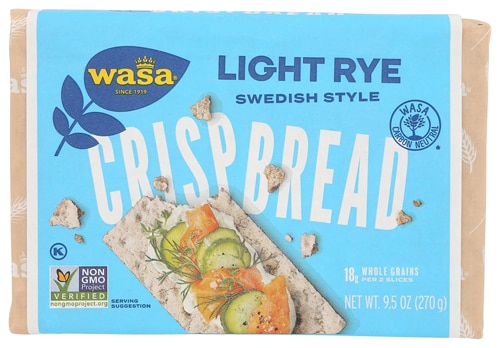
Digressive anecdote:  I was sharing the joy of the fava beans with my girl, and later she sent me a picture of the Wasa rye crackers, above. "Do you know about these, fellow fiber enthusiast? They've got a lot!" It made me laugh, "Sweetie, these are a Norwegian heritage food! I was raised on these - I think I was teething on them. Grandma used to eat them with pickled herring. Yum! But I haven't had them lately" And they got added to my shopping cart the next time I was in the store. This morning I had a couple with smoked salmon and a very thin schmear of cream cheese. Yum! 

Now in my third week, I didn't sweat Thanksgiving but did track after the fact. Nearly twice my daily points budget. Hooray for a reset this morning, and another one tomorrow.

The reason I want to calibrate my eating is because I want to stop and then reverse the weight gain. Just three days after restricting my food to within budget, the scale had dropped four pounds from that shocking high! I knew the drop was no more reflective of my actual weight than was the one-day peak that sent me in this new direction, just a fluctuation of water and other temporary things. I weigh daily, and I focus on an average of several days, not any one day. Still, it was nice to see such lower numbers. Now, three weeks in, my weight has settled in around that lower number. I plan to continue to track via WW until I don't want to any more. I don't know if I'll lose weight this way, but the reset and re-calibration is worthwhile anyway.

Tuesday, January 7, 2025

Cardio

I love the routine I have for functional strength training. I've been working with my trainer for years now. When I met her she referred to her "boyfriend", and it was a big deal when she moved in with him (in his parents' house). Now, they are married, own their own house, and have a three year old! Adorably, the three year old is often on the other end of the video call, and she sometimes copies my movements. I love the movements, the strain on my muscles, the stretching and moving in every direction. I work out on my own between our twice-a-week sessions, but for my trainer I work harder than I do on my own. So this is a success, and I won't tamper with it.

But I need to work my heart harder, according to my doctor. I need cardio! She gave me specific targets of time and effort: twenty minutes of high intensity exercise five times a week!

I have not enjoyed high intensity exercise for a few years. I used to love it! My first brush with using machines, the basement Nordic Track, was the first time I consciously felt how good the body feels during and after working hard. It can be exhilarating! I believe the machine got me to a high enough cardio fitness level that finally I could start running. And I loved running! No, not every day, and not ever for the first 10 minutes. But the way it made my body feel was great! 

I was an early adopter of a heart rate monitor, back in 1998. I'd read about appropriate training intensities, and here was a gadget to help! My first one had a chest strap and a watch that displayed time, heart rate, and elapsed time. Nothing else- GPS hadn't downsized to live on wrists yet, and phones were flips that couldn't even text. I propped the watch up on the Nordic Trak so I could see it all the time. I learned that perceived effort each day did not tie to heart rate - I could feel like I was pushing myself to the limit, but some days the ol' heart just didn't want to pump fast. Interestingly (to me, any way) the day before I got sick was always a day the heart was sluggish.

I also learned that walking didn't get the heart rate up high enough to be in the high intensity zone. Nordic Track, swinging my arms in time to my legs, quickly did raise the rate. A walk has many benefits, but I cannot hustle enough to accelerate the pumping of my heart. Only uphill - which in the absence of a mountain to climb, is always going to be brief - begins to approach my target zone. My first tentative jogging steps taught me there is no comparison to walking - my heart got excited and pumped away! The mechanics of walking and running are really distinct from each other (jogging is simply slow running - no technical difference). I might be a slow AF runner, with young men passing me while walking, but the cardio benefits are real even at my pace.

When I stopped running, I stopped ever exercising in that intense zone. The last year I ran anything more than a token amount was 2019. My Nordic Track had long been retired, in a dusty heap in a corner of the basement. I still did small amounts of cardio on the machines in the gym, but that all came to an end in March 2020. 

But now I have machines galore! My BIL lent me (effectively gave me) his long-unused stationary bike. I bought a rowing machine in January 2023, and used it a lot the first couple of months, and only intermittently afterwards. I started up again this autumn, since I started on this cardio bout, and also because now I have a friend who is also starting to row. I have a mini-trampoline, which I use to bounce a bit in front of the TV. But on the tramp, I can't get going enough to get the heart rate high - my balance isn't what it was, and so I don't have the exuberance I used to, not getting a lot of air on the bounces.

Detailed stuff about heart rate:

When I first started using the heart rate monitor, I used the classic formula for maximum heart rate: 220 minus your age in years. So I was about 45, and my max heart rate was calculated to be about 175. There is a formula more accurate for old people, seventy percent of your age subtracted from 208 (208-(age*.7)). The two formulas give the same answer for age 40 and from then on the "208" formula gives a higher number as your max heart rate, and is said to be more generally accurate.

The reason for knowing your max heart rate is to be able to calculate training intensities. Cardio benefits really kick in at the higher intensities, 75-85% of max. Fat burning benefits kick in at somewhat lower intensities, 65-75% of max. 

But here's a wrinkle I only just learned - biking (an exercise that doesn't use your arms) will lead to lower heart rates than running (a whole-body exercise), but can yield big benefits at a lower number. Who knew? 

But I found that even though I was working very hard on the rowing machine, my heart rate (on the Apple Watch) was consistently lower than on the bike! I was confused, because the rower certainly uses my whole body. Was it a measurement error from the watch? I googled "why is my heart rate so low on a rowing machine" and found links into Reddit, where this very question was being addressed by the helpful nerds who hang out there. Basically, they said we must be using the wrong technique. We must be using our back and shoulders more than our legs, which is inefficient.

So here's the rowing technique tips in english: the first part of the motion is pushing back explosively with your legs. During that, your hands and arms are just along for the ride, with your legs doing the work to pull the bar you are holding. Only after your legs are fully extended should you lean back, and in the final part of the stroke use your arms to pull the bar up to your chest. The return is rest, no effort expended. And, do not try to go faster by returning faster! That should stay the same, a passive ride, until the legs are bent and you can explode back again. The faster you push back, the more strokes per minute. But strokes per minute doesn't need to get too fast; instead, raise the resistance.

So I tried that one morning, and the difference in my heart rate was signficant! I went up to a higher zone quickly, and stayed there the whole time. And felt my whole body aerobicized afterwards, a great feeling! It feels like a break through!


Tuesday, June 4, 2024

Report Card

 The last time I published a report card was in January of last year, looking at 2022. I actually have kept up tracking myself primarily through apps and devices, and from time to time I sit down and go through the data trying to glean some meaning or insights. I haven't felt like I've learned that much recently, certainly not something worth sharing. I still haven't got any wisdom to share, and it's not that pretty a picture, but the data is what the data is, and there is a certain value in simply showing it. Keeps me honest with myself.

First, to get it out of the way, my weight is high and stable. No need to share a graph. I gained a bunch of weight in 2022 (Fuck You, Intuitive Eating!) and it's stayed on. I haven't been motivated to any kind of a big push to change it. And it's been remarkably stable - plus or minus four pounds. I do plan and track my food most days, but it's more part of planning how to spend my time than trying to morph it into fewer calories. And then, keeping me conscious of what I'm doing, to do away with mindless eating. I still weigh myself every day and it gets recorded on the internet, for whenever I feel like reviewing the history in detail. I chuckled one day recently when I got up and peed several times during the night and found the next morning I was two and a half pounds down from the day before! That's why I can't get excited about day-to-day fluctuations, the range I'm seeing is just water weight. 

First up: Activity. As always, darker is better. January was knee recovery time, and I give myself a pass for everything but workout days. My "workout days" focus on functional fitness, either in my home gym or with physical therapy (my PT experience the past couple of years has been a solid hour of working out followed by 15 minutes of massage and stretching). With PT from the knee replacement added to working out in the home gym, I was really doing a lot. It also paid off, as now my calories and steps are back to where they were last year (which was NOT a stellar year for activity, I admit). The walking mileage shown here is from taking a deliberate walk where I activate my GPS, not an accumulation of steps during the day. I'm currently pretty active in the house and garden, which keeps my steps up, but I haven't been feeling the walk as a way to spend time (and I only do short and slow training walks with the dog, not worth tracking.) I've added a new row since the last time I posted, "stand time". My apple watch tracks this - how much time do I spend on my feet all day. It seems worth looking at, since my goals involve being less sedentary. Here, I'm moving in the right direction!

Next, some health parameters. These are both controllable and uncontrollable things. The big worrying trend is migraines, which are up. I have fallen off the meditation bandwagon, and that might be a contributing factor. But my doctor thinks that perhaps allergies are acting up - and there is a connection between respiratory inflammation and migraines. So I'm trying to be more faithful on OTC allergy remedies. "Alone days" (still looking for a better descriptor) are days I don't talk to anyone. I might be texting or emailing, but it only counts if I talk to someone either in person or on the phone. I really enjoy days on my own, but I am aware it is not healthy to have too many. And besides, I enjoy my family, friends and neighbors! I continue to be a sleep champion, with a normal seasonal variation of less sleep with longer daylight hours. (These sleep hours are separate from time in bed, as the watch purports to distinguish between lying awake versus truly asleep. I am awake at least 45 minutes during the course of the night - but apparently, that is less than average for a woman my age.) Heart rate variability is meant to be an overall measure of stress, with a high number being better. I haven't been looking too much at it, but the apple watch keeps track, so I decided to add it to the list. Resting heart rate, as a reminder, measures resiliency, with a lower number better.

Lastly, how do I spend my leisure time? (Ok, it's all leisure time. I do a minor amount of volunteer work, but I'm not tracking that here.) This whole category is not necessarily "more is better", but it is what it is. I also struggle with whether the "year" column should show an average of the months, or a cumulative total for the year. It's currently a mixed bag. I've actually wanted to read fewer books this year, because I read a lot of fluffy entertainment and it gets in the way of doing more productive things. My TV watching is up recently, as I indulged myself with a season of my only reality TV show, "Below Decks". I haven't been watching movies, neither at home nor out. I have been traveling a modest amount this year, more shorter trips, which is suiting me right now. And I'm hoping for more sailing, as my partner has retired, which multiplies the number of possibilities of aligning our two schedules and the weather.

So that's the story in numbers. Looking at this does motivate me to move, so I'm off to do that now.

Excelsior!

Monday, March 6, 2023

A Year (+) of Intuitive Eating

(Note: to see this graph on a phone, turn horizontally.) This is my weight graph from 1988 to the present. The actual pound numbers are deliberately left off, but the horizontal grid lines are ten pounds apart. The blue horizontal line is my aspirational "goal weight" (to which I no longer aspire) and the red horizontal line is where my body seemed to have settled during late middle age, and where I'd be thrilled to get back to. See how my weight shot up faster than ever in 2022, when I first read "Intuitive Eating".

I first wrote about Intuitive Eating (The Thing) back in January a year ago. I revisited it later that month, and then, in May, wrote a "Fuck You, Intuitive Eating" post.  I had gained more than 15 pounds, and was was extremely annoyed with having done so. Never-the-less, I didn't reject everything the book, and the approach, had to say. I had made some changes, learned some things, and it has stuck with me.

I pretty much spent last year telling myself I was going to ignore my weight and focus on activity, as a way of being more fit and stronger, not as a way to lose weight. I've had some physical challenges, from my knees and my back and getting covid, so my progress is not what I'd like it to be. But I don’t want to ignore my weight any longer.

The Intuitive Eating principles are good, and there is nothing in them I will disagree with. To refresh memories, here they are: 

  1. Reject the Diet Mentality
  2. Honor Your Hunger
  3. Make Peace with Food
  4. Challenge the Food Police
  5. Feel Your Fullness
  6. Discover the Satisfaction Factor
  7. Cope with Your Feelings Without Food
  8. Respect Your Body
  9. Exercise: Feel the Difference
  10. Honor Your Health: Gentle Nutrition

But the implementation seems to wander into territories I do disagree with. I joined a Facebook group specifically aimed at beginners to IE, with moderators and others answering questions. There, IE seems to be based on these ideas:

  1. Few people actually lose weight on diets.
  2. Of those who do, almost all gain it all back, or more.
  3. And so, don’t bother trying to lose weight. It won’t work.
  4. All food is morally equivalent and emotionally equivalent.
  5. Any restrictions on what you eat will inevitably lead to boomerang overeating. 
  6. Eventually, if you just eat what you want, you will naturally eat well. (But not be skinny).
  7. Weight cycling can be worse for health than being fat.
  8. It's possible to be healthy and fat.
  9. The medical system will blame ills to being fat rather than treating the actual illness.
  10. Any suggestion that being fat is bad for you is fat shaming.

There is truth in all of these, but they are not irreversible laws of the universe. My own personal experience challenges the first two points: I lost over forty pounds twenty-five years ago, and yes, I gained it all back - this year - twenty-five years later! There is no question in my mind that my life has been better in many dimensions because of twenty-five years of weighing less. I could move better, wear nicer clothes, achieve more social and professional acceptance, all because of weighing less. Much of this is societal, not health, oriented, but hey, I live in this world and that stuff matters. Were my health outcomes better? I don't know - I have had back and knee problems, and migraines, all along these 25 years and I don't think it's all tied to when I weighed more.

One more point to rag on IE folks: all foods being morally and emotionally equivalent. Not ever going to happen. I know things about food, nutrition facts, yes, but also facts about their origin and their impact on the planet and things living on it. Also, I do have some decades of having memories tied up in foods. So not all equal, no way. This is where I got into some arguments with the folks on the IE forum. Some are intransigent on the topic "All food is processed, even if it's to pluck from a tree and brush it off before biting it. So there is nothing wrong with processed food." This is where the cult comes in. Can't argue with cult members.

So what have I learned from IE?

I deliberately sought out and ate foods that I have been avoiding, more or less, for the last twenty-five years. Specifically, bread and pasta. Sweets too, of course, but more so bread and pasta. And guess what?  I still could have a love affair with the white flour products. They still taste good, sometimes wonderful. But making them an everyday part of most meals does not feel good to me. They taste good, and my body feels fine right afterwards, but I am very aware there is a longer term reaction to them. They make me crazy and I want more and more. This is over the long term, hours and days. If I eat them daily, the urge to eat more and more stays permanently. So, surprise surprise, the way I ate twenty-five years ago, steering away from the bread and pasta, is the way I feel better. 

So here’s what I’m thinking. When I get a carb-type craving, I might go ahead and make pasta or bread, but I might also steer towards beans, peas, eggplants, other roasted veggies with a sauce... I can get the immediate soothing fullness from those foods and I'm more likely to skip the craziness later. This is a useful learning, and helps me avoid the rebound/rebellion effect from simply saying "I can't have them". But if I really want them, I can have them. I keep bread in the freezer and pasta in the cupboard. (As an aside, the jury is still out on oatmeal. I started making steel cut oats in the instant pot, and eating no more than half a cup with toppings for breakfast. Unlike most starches, it didn’t result in early insistent hunger pangs in just a couple of hours most days, instead carrying me to a late lunch if necessary. So I may keep oatmeal in the breakfast rotation for a while.)

The IE folks really want you to throw away your scale. Not going to happen. Not when I've got 25 years worth of daily data to look at! But my scale is wifi connected - every time I step on the scale it stores the data on the web. I covered up the number display with a post-it note, and I would go a while -weeks - before looking at the numbers to see where I am. That's how I know that I gained 15 pounds. I didn't look at the numbers often, but I was aware I was gaining. I just didn't care. Much. I cared (and still care) much more about clothes, those that grew tight and then stopped fitting at all. Sigh. Some of that is comfort, and some of it is looks. And some of it is being cheap and not wanting to buy new things when I liked the old clothes. I took the cover off my weight display and watched it every morning for a while, and then I decided I prefer to cover it up and instead think about my weight when I want to think about it, not routinely first thing every morning.  But I like knowing the data is there when I want to look at it.

The folks in the IE forum constantly remind us that IE is not the "hunger / fullness" diet. Too bad. I think understanding and acting on hunger and fullness are critical for me to be the healthiest I can be. I've been pretty internal lately about why I'm eating what I'm eating, when I eat it. I still have to fight the urge to always clean my plate, and I’m avoiding that issue by dishing out smaller portions with full understanding I’ll go get more if I feel like it. Sometimes I do, often I don’t.

One thing the IE folks get right is that it is OK to eat to soothe yourself. Feeling your emotions fully is important, but it's also ok to soothe yourself with comfort foods. And to avoid feeling deprived, to avoid the boomerang effect, go ahead and eat those things you are obsessing over. The basic premise, that eating Cheetos for dinner one night isn’t going to kill you and you shouldn’t feel pangs of guilt over it, is absolutely true. But Cheetos are a food that is specifically engineered to overcome the body’s wisdom (ie intuition) and so if they are a regular part of the meal rotation, simply tuning into your body to see if you want them is not going to give a good answer. It was in this Cheetos discussion that I decided I had to part company with the IE folks who keep saying all foods are equally good. No foods are inherently bad, but that doesn’t make them equal.

A word about sweets, candy, cookies, cakes. After I eat dinner, I want something sweet. There are some things that most days I can (and do) eat just a bit of and be done- Dove dark chocolates, Gin-gin ginger candies. Other things, cookies and cakes and ice cream, I’m going to want to eat a lot of. So I’m not banning anything, but for the time being I’m less likely to buy those other things and bring them home. I’ve found it relatively easy to pass them up at the store, or even in an unopened box at home. If I want them, I’ll eat them and that’s that. But I don’t want to munch casually and mindlessly, so I’ll make it just a bit more difficult to get them. If I could buy just a quarter cup of Jeni’s splendid double dark chocolate ice cream, I would, but sadly it comes in pints and I’m not tuned in enough to stop at a single small scoop from the larger container. Most days, anyway.

So that’s where I am. I am going to try to lose weight, by modifying what and how much I eat, though not drastically and not obsessively. And the focus on physical activity and trying to get strong remains more important to me than the weight.

Saturday, January 28, 2023

Five Things for 2023

Snapped right after a new color in the hair.
Also shows the hips, as big as ever!
The month is nearly over, but I'm finally getting around to sharing some of my notions for 2023. I like to use milestones to take stock and think about changes, whether or not they fit the mold of "resolutions", and whether or not you are doing it at year end. So here I am. New hair and all.

I am very influenced in how I'm doing these things by Gretchen Rubin and her podcast, "Happier". For several years, she and her sister have been promoting ways to think about what you want to accomplish and tools to get that done. So some of this is borrowed.

There is not a word about weight here. I've tied with the highest weight of my life. I can't say I don't truly care, but it is not my focus right now. What is my focus is getting stronger and getting out there and doing things.


  1. Word of the year
    Funny, this word just came to me yesterday. I'd been mulling it over, various iterations of how to describe being more active in a single word that would resonate. Maybe because it's movie season, it finally clicked: "ACTION!". Less sitting on the couch planning to do things, more actually doing them.

  2. Outside 23 for 23
    This is pure Happier podcast. For several years, they have been promoting a specific action to be done for a certain amount of time every day for the year. They did things like "walk 20 minutes in 2020". This year, it's be outside for 23 minutes every day in 2023.  There are so many benefits to being outside, proven often. And, one is more likely to do things outside if you are trying to be outside anyway.

    The only rule to participate is there are no rules - just do something that is meaningful to you. So passing between house, car and stores can count if you want it to. I had a very low energy day where I sat in the sunshine in back wrapped in blankets watching Bixby. Definitely counts.

    I have to confess that despite the lax rules, by any construction I have failed at this three times already this year. Each of these was a nasty cold day with solid rain and wind. Still, I think I can do better. I do have a covered front porch - I could swaddle in blankets and sit out there. Even better, I have rain gear, and it works.

  3. Minimum Baseline
    This is an idea I got from a running coach. She used in the context of "every run feels like crap as you start". And so the idea is to get out there and tell yourself there is an absolute minimum you can do no matter what - even if it's just put on the running clothes and jog 100 yards. In my case, it's not about running goals, but overall activity for the day. I've tracked my daily steps for more than a decade. For the past several years, in addition to looking at monthly average steps,  I've looked at the metric of how many days had fewer than 5,000 steps. If you look at my previous report card post, you will see that December had 15 days where I walked fewer than 5,000 steps! That is an all time high! An all time low for sluglike days! Without an office to go to, and with fewer and shorter dog walks in the works (see below) I do have to work at 5,000 steps. But it is ridiculous to be that inactive. I do need to walk my feisty little dog. In addition, while I did succeed in getting rid of my treadmill (yay!) I still have my little trampoline. That gives me about 1,000 steps for every 10 minutes of bouncing. Bouncing is definitely a workout - generally gets the heart rate up higher than just strolling. That is my backup if it's a nasty day where neither the dog nor I want to go out.

    So I've only had one day so far this year where I fell below 5,000 steps in a day. I think what happened is that it was a nasty day, I was thinking I'd get a chance to bounce my way to the finish line, but then I discovered I had to be on the phone or zoom from 5 pm to 9 pm. When I finished with talking to people, I was 2,000 steps short of the goal and not prepared to work that hard for at least 20 minutes instead of going to bed.

    But having been caught up once, now I'm alert to this. I can manage my time better and make sure this particular trap doesn't catch me again.

  4. Bixby Training
    Bixby is the snuggliest dog in the world, for me. But he is very barky. He lives in a high state of arousal, which is not good for him nor for me. He can get into a barking frenzy, and he moves into Rumpelstiltskin mode where I think he will simply explode if he doesn't stop.  (He appears to have a very solid bite inhibition so I don't think there is any danger, but it's a lot of barking and lunging.) I am working on training him out of this. I have known general approaches to this for years, but I've decided to really buckle down and work on this right now. Very specifically right now, I'm working on the leash reactivity, rather than a big focus on the home barking. My trainer recommended to pick one where I can be consistent and focused. I decided that right now, it's more important to me to be able to take him on walks than to calm him down in the house.  During this time, it's better to avoid ever getting him over the reactivity threshold when we're out on the leash, so it's close to home, with a full pouch of very high value treats, and a close eye on what is going on around us. I believe I'm making progress with him. Today, I took him down into the park (at 7 am!) for the first time in a while. I was able to keep him calm the whole time despite seeing some dogs from a bit of distance, but he was very near the threshold when we got home. But, progress!

    So I also am striving for a Bixby minimum baseline, on leash and off our property for at least ten minutes every day. More short sessions is better than long ones like today's more than 30 minute walk.

  5. Have Adventures!
    I love staying home and reading about other people's adventures. But when I get out there and do something different than usual, I love it. My threshold for "adventure" is very low. A trip I took to a resort/shopping development in January for a couple of hours counts. Hiking in new places count. Participating with a bunch of strangers in an usual performance art activity will count, too, if it comes together. Actual objective adventure also counts!

Wednesday, September 21, 2022

Doing my Best to Move

Tuesday's hike was filled with wildlife!

My knees still feel better, but it's not perfect. There is some pain, especially up hill, and my muscles definitely are weak and also I'm stiff and inflexible. The more I read about Greece (coming up in November) the more steps I hear about... so I'm trying. In addition to my twice-a-week hour with my trainer, I'm doing 45 minutes once a week in physical therapy, and I have a 75 minute tap dance class once a week. But I'm still trying to walk every day, and run through the basic knee exercises on days without either form of PT (personal training or physical therapy). I'm not quite making that goal, but I'm doing much much better than I was a month ago.

I've found joy in the walking again! And that helps me to get out there!

Taking a page from both K's blogging and also from my earlier years, I'm posting a quick update every day in a special blog for that purpose. The link is on the right side of this blog, but here it is as well:

Nan's Quick Log

I'm using the automatic posting from different devices and apps I have that keep track. So far, I've only posted when I do a deliberate exercise walk, run, (or in one case) kayak, not my incidental movement. I'm still experimenting with what works. I was looking for something I can do from my phone, because the apps that make the record are on my phone, and I don't boot up the computer every day. Because it's not a complete habit yet, sometimes I'm posting a day late.

I don't expect anyone to comment there, but knowing that maybe someone will see it is part of the motivation to do it.

I used that blog years ago - the last previous post before I started using it again was 2014!

Friday, May 27, 2022

Fat

I started this post several days ago, and abandoned it after a while. It had nothing new to say about what to do with the fact I am fat. If I don't want to be fat, I should eat less and move more. Specifically, I should have better portion control at meals, eat more vegetables, and fewer sweets, especially at night. And if I was an Intuitive Eating success story, all of the above would come naturally. But while of course I'm not happy with how I look and feel, I am not willing to make a stringent commitment to do something about it. So I'm muddling along, making changes at the margin some days, other days, not so much.

I was going to delete the partial post below, but I think the emotion expressed is true, and I want to capture it, for myself.


I am fat. I weigh more than I have in 25 years, and it isn't all muscle. I am fat. My clothes do not fit well. My stomach gets in the way of certain exercises or stretches. These are facts, not feelings.

I don't like the way my body looks and feels. I am ambivalent about what and how I have been eating. These are feelings, not facts.

Fuck you, intuitive eating! You have screwed up how I think and feel and act around food. Before I read the book, I would have said I only needed to modify two main things in my diet: better portion control at every meal but especially at night, and better control of night time sweets. Now, I think I'm in much more disordered eating, because IE advocates eating whatever you want whenever you want. The subtlety of IE comes in the word "want" - getting that right - but I'm not sure I'm ever going to get there. And I'm also not willing right now to go back to the more structured eating I was doing before. So I'm stuck, and not happy about it. But it's all within my control. I just want to let go and not have to be in control. Ugh.


Friday, January 14, 2022

Avoiding Blursday

 There was a note in (I think) the NY Times about how staying at home through the pandemic leads to "Blursday". It can feel like we are sleepwalking through our days, every day Groundhog's Day. I think this was already sort of true for me when I retired, but the pandemic really accelerated it. How do I tell one day from another? What did I do yesterday, much less last week? And, how did I get through a week without doing anything? Anything useful, or productive, or compassionate, or anything other than basic eating and flopping on the couch with a book or tv? I first wrote about this problem just a couple of months after I retired, and again in 2020. It's remained a problem, more or less, as time moves on. The "less" is generally when I have actual deadlines coming, things like leaving on a trip. This winter, with an increased need (again) to stay home, it feels necessary to grasp my days and make something of them. But how?

You've seen my report card, where I record the statistics kept automatically for me by my various devices and automations. Sometimes, that simple record is all I have, and even some of the line items are hard to recreate: did I actually go downtown this month? Let's look back at my calendar or emails to see... And, with so few items on my calendar, I don't look at it, and so forget the few things I have.

I have to-do lists, and that is not the problem. Actually getting up off the couch to do things, when I think "but I just did something on that, that's enough for now" and "I'll do something about that tomorrow". But I need the record, to keep me honest. My memory will always round up, way way up, assuring me things have been better than they actually have been. I have tried various things, but I've got a couple methods that I've stuck with for a while, and they help.


One of the practices I've long but intermittently engaged in, is tracking my food, for diet purposes. For the past couple of years, I've done some daily worksheets more than half the days, that ask me to plan food in advance, and track what I've eaten yesterday. But in addition, these worksheets (which have varied over time) have spaces for things like "What am I grateful for today?" and "What did I do right?".

So I've decided to quit this pricey diet group, and make my own worksheets. I freely plagiarized from several different sources to create something new for this year, a daily worksheet. Food remains prominent, as I work to both plan better and record what I actually eat. (I am motivated to plan in order to use the food I have in the house with less waste, to ensure I am getting some vegetables in especially, and to also look at the calendar, make plans for the day, and ensure I will have time and energy to cook and eat according to plan. I'm recording afterwards because I want to focus on how I feel before, during, and after eating.)  So far, this one-page a day is working for me. I generally do this in the morning, after that first cup of coffee.

I'm also recording a much wider set of things about my days. I set up a matrix of many dimensions of where my time goes: exercise, chores, projects, being social, entertainment, etc. I have the dimensions down the rows and a column for each day. I simply put a dot in a box if I did this thing this day. Nothing about how much, how well, any of that. Did I do it, or not? Over time, I'm trying for a balance across the things. 

I'm using these worksheets on the ipad - I built them on the computer in excel and powerpoint, and then turned them into pdfs I pull into my note-taking app on the ipad. So with my apple pencil, I write on the ipad as if it were paper, but it's not paper. That way, should I want to go back and look, I've got it near at hand, without cluttering up things. And, I can modify and adapt the worksheets at any time. Also, the colors mean nothing, I just switch up colors in the app every day because I can.

Again, I see this as keeping me honest about what I am actually doing. I am very self-indulgent, in how I spend my time, and also how I eat. But I am striving for balance, and that requires a clear-eyed understanding of what I am doing. This is daily a minimal effort, and it feels worth it for now.

Tuesday, January 4, 2022

Intuitive Eating


It turns out Intuitive Eating is a Thing. It's even known as IE to its adherents. Forthwith, my exploration of IE with my thoughts.

I found IE (the Thing) from a podcast I follow, Ten Percent Happier. The interview was with Evelyn Tribole, one of the authors of Intuitive Eating, the book which is now in its fourth edition, and several other related books. And founder of a nutrition practice that trains Registered Dieticians and nutritionists to be Anti-Diet Dieticians. The focus of the podcast series is mindfulness, and in this episode Tribole gave her distinction between mindful eating and IE: mindful eating is a specific practice engaged when eating, while IE is a set of principles for living your life with a healthy relationship with food. One could engage in mindful eating while still having an unhealthy relationship with food. 

As is my wont, I plunged into this thing. I got the basic book from Audible where it was included in my membership and I listened to all 13+ hours in three days. I bought in hardcopy paperback the associated workbook, and joined a Facebook group that gave a quiz before they let you in, and an essay exam before allowing you to post. 

So quick warnings before going further:  This is the Anti-Diet, and will go against most of what we think we know about how to eat to accomplish our goals. And, it forbids having certain goals. And it denies what we think we know about how our bodies work. It denies there can be such a thing as a Food Addict. And, it comes across to this skeptical cynic a bit like a religion, because if it does not "work" it is because you, the failed practitioner, don't believe in the principles enough. This is one of the symptoms of a cult. 

So I am an IE skeptic. I am not all in. I think there is a lot of value here, and much of what they say about dealing with food is very healing. And a lot of it is very compatible with what I have come to believe about food and dieting overall. But the way it is written seems to be aimed at an audience that is in a much different place than I am. And some of it rings false with my own experience and evidence, not just beliefs.

So here are the ten principles that compose IE, the Thing:

  1. Reject the Diet Mentality
  2. Honor Your Hunger
  3. Make Peace with Food
  4. Challenge the Food Police
  5. Feel Your Fullness
  6. Discover the Satisfaction Factor
  7. Cope with Your Feelings Without Food
  8. Respect Your Body
  9. Exercise: Feel the Difference
  10. Honor Your Health: Gentle Nutrition

The first is the big one. Reject the diet mentality, reject everything about diet culture, and here's a big point: do not try to lose weight. As long as you are trying to manage your food with the intention of losing weight, you will never make peace with food. A large part of the thinking is based on the psychological principle that restricting something leads to future rebound - the forbidden fruit tastes sweeter.

I am fully on board with the concepts of body positivity, health at every size (which is also a Thing, HAES), and the evilness of the enormous exploitative economic machine that is the weight loss industry. I fully acknowledge most attempts at long-term weight loss fail, and how much money is to be made in that fact. I've felt the effects of how denying something can lead to obsessing about it.

IE also fully recognizes that our society has a strong anti-fat bias, and that makes it difficult to give up the idea that being thinner is a good thing. And, in some cases, being fat causes economic losses and bad health care from medical professionals that can't see beyond the number on the scale. But, they counter, since almost no-one succeeds at long-term weight loss, and there is strong evidence that weight cycling is very bad for your health, there is no point to trying one diet after another, even if from time to time you are thinner. This condemns you to a life of never being happy with where you are and never being comfortable with food.

IE does not promise that if you fully embrace the process leading through all their principles and then practice them in your life, you will as if by magic end up losing weight after all. Instead, they say that you will simply lead a happier life. And be healthier, if only from stopping weight cycling. I sense a hidden footnote there, maybe it was in the earlier editions of their books, that many people do eventually end up at an equilibrium at a lower weight than where they started out. 

They state that during the earlier stages of their process, many people initially gain weight, as folks move through the first four principles in what they describe as a "re-feeding" process where all food becomes "emotionally equivalent". And they have that word "initially" in there, as if they are suggesting that as people internalize principles five through seven, where you learn how to stop eating, weight starts to come off. But they never say it. Principles eight and nine are to learn how to love your body and exercise only for the joy of it. And only at the end do they bring up the notion that while any and all foods should be emotionally equivalent, not all foods are nutritionally equivalent. 

Much of the practices are geared towards being mindful of and in your body. In my chronic pain practices we call this somatic tracking. In IE, it's called interoceptive awareness. (You've heard of proprioception? The sense of our body in space? This is the sense that goes kerflooey when vertigo strikes, and can cause sea sickness when screwed with. Well, interoception is internal sense of our body. They are real words, but spell checker doesn't acknowledge them.)  Feel and acknowledge and feed hunger, and rely on the wisdom of the body to determine what and how much to eat. As noted before in this blog, as if. This is the holy grail, and I believe it is the right way.

I think these books are geared towards people who are much more immersed in Diet Culture than I am. And I say this as a person who has for twelve years blogged on my diets! Perhaps at earlier times in my life I was much more of a true believer in The Way to lose weight. Perhaps I have demonized foods. But maybe because I have been both analytical and introspective about what I was doing, and because I've always considered myself a skeptical cynic, and because I have become much more tuned to my body through mindfulness and dealing with chronic pain, many of the exercises in their workbook don't work for me. But some do. (I wrote about my movements towards being more at peace with food just before I fell down this IE rabbit hole.)

My main caveat about IE:

I have engaged in weight cycling, but I also have not in 24 years gone back to my top weight. I am happier for not being that roly poly. And I'd like to be less fat in the future, I'm not willing to fully embrace this weight. So with that shred of doubt, I'm not a true believer and thus IE will not "work" for me.

Other bones to pick: 

  •  I understand what they say about not demonizing foods, but foods will never be "emotionally equivalent" for me. There are memories and associations, and there are past somatic experiences, and there is knowledge about nutrition, and even often knowledge about the source and environmental footprint of how how food got to my plate. They do not embrace vegetarians and vegans, apparently believing most get there from a health rather than an ethical or environmentalist viewpoint, and any forbidding of food is anathema to them.
  • For folks trying to make foods emotionally equivalent, to my eyes they push grain-based carbs rather hard. (Perhaps someone from a different diet history would think they are pushing fats too much.) 
  • They discount fresh foods, and think fruit has no staying power (can't disagree) and think vegetables also have little staying power (I disagree) though they list fiber as distinct from vegetables and like fiber. 
  • Their workbook has good exercises to do - vary your lunch, for example, while keeping other meals equivalent for a couple of days, and mark down experience with hunger and satisfaction. But the accompanying worksheets are prepopulated with examples that show their biases, which don't always correlate with my own experiences. For example, sandwich lunch versus salad - their "notes" example say salad didn't hold them the way the sandwich did, because the bread helped - but they assume a skinless chicken breast and fat free dressing on the salad, when I load my salads with things like olives and sausages and find the combination of fiber from the greens and fat and protein hold me much better than a bread heavy sandwich. (This is just one example, there are many). 
  • We know the food industry works to increase palatability while delaying satiety in an effort to get us to eat more. This is not addressed. I'm not sure I'll ever be able to rely on my body to overcome the forces arrayed against it - except by eating real, whole, foods that haven't been subjected to industrial dark forces.
OK, enough for now. I'm continuing to figure things out, based primarily on my own insights leavened by reading. But I want to focus these first couple of months this year on getting strong more than what I weigh. That requires getting up off this couch!


Sunday, December 5, 2021

Satisfied

I'll never be satisfied!

I've been embarked on an odyssey of mindful eating attempts. One of the main goals of this is to reach a point where I know not only "what" but "how much" I want to eat, I eat just that, and then I stop. Having just one exquisite but tiny little hand-crafted chocolate, for example, carefully selected from a free display, and then walking on, satisfied. Or, more prosaically, dishing out a small portion of one of my favorite dinners at home and then not even finishing that, because I'm satisfied. I truly do not want more.

As if.

As an experienced dieter, I have encountered various descriptions of this holy grail over the years. All of them are about how to think and act around food, and only go lightly on what to actually eat. No food lists or meal plans. Just paying attention to how much and what you eat.

I think there is a lot to this notion of listening to your body and acting on it. I picked up a book years ago, The Beck Diet Solution, with a Cognitive Based Therapy approach to eating, marketed as "learn to think like a thin person"! (This book was very influential in my starting this blog back in 2010, as one of the tenets was to have a diet buddy. There is still a link to the site over on the right.) There were a lot of useful exercises - self-experiments - to do involving learning how to recognize what we actually feel in our bodies, versus all the layers of thoughts and emotions we overlay on food. For example, she instructs you to skip a meal and check in on hunger at regular intervals, to remind yourself what hunger really feels like, while also discovering that hunger is not an emergency, you won't die, people live for weeks without eating anything. Also, to eat very slowly, setting down the fork between bites, and writing down how you feel before, during, and after. Make a daily plan in advance of all meals, and assess afterwards how you did. I found all of these exercises useful. Ultimately, though, the CBT approach relies on logical self-talk ("I would rather weigh less than eat this cupcake") in a way that requires self-discipline and self-control. After a while, it just gets tiring. It's a never-ending grind. Sigh.

Several years later, I discovered the Summer Tomato, a much more joyful approach to how to eat. Created by The Foodist, the basic approach was to only eat Real Food that tastes awesome (thus fresh tomatoes only in the summer), which requires cooking for yourself. Further, eat mindfully, exercise, and listen to your body. All good stuff, and reading her book several times, reading her blog, and listening to her podcast really did start to change my relationship to food. It wasn't a fight, because if it was a fight, you couldn't win. For me, it was still a struggle to lose or maintain my weight, but I definitely upgraded my food choices and learned to appreciate my food much more. She offered a week-long video course on mindful eating that I subscribed to. The main things I got out of that were to slow way down - fork down between bites - and to chew thoroughly before swallowing. And eliminate distractions while eating - tune in fully to the physical experience of eating and how it makes you feel. She promised the magic state of knowing exactly what and how much to eat I described up top as the result of fully embracing this approach. I never reached nirvana, but I started to make peace with where I was.

Somewhere along the way I started meditating, and I subscribed to the Ten Percent Happier app, where I am still a happy customer. They have a course on Mindful Eating, with Judson Brewer, who is an addiction specialist. I took that course, which goes deeper into the mindfulness approach than the Summer Tomato course. From there, I subscribed to Brewer's own pricey app, Eat Right Now. That had an intense month-long course on mindful eating. Some approaches I've learned from Brewer (that also work for things like anxiety and pain) are breaking the habit loop, RAIN, and disenchantment. Habit loops are something I knew about, but participating in the course helped me specifically note habits and try to modify them. RAIN (recognize, acknowledge, investigate, note) is a meditation technique where you turn in towards an unpleasant sensation (cravings, in the case of mindful eating), and explore what you are feeling with kind curiosity. This is called "surfing the urge", knowing that it won't last. Disenchantment comes from exploring your body after eating whatever, and really feeling in your body whether it feels good. I had some success with these things. I recognize a habit much more readily now, and much more of my eating is a conscious choice, though not always a wise decision. I was sometimes successful at surfing my urges, but often my urge seems to be driven from deep within me and doesn't dissipate after ten minutes or so, as the technique is geared towards. Instead, I might drive to the supermarket to buy ice cream, because I have an idée fixe that just won't go away. That's where disenchantment comes in - after eating, I can explore how my body really feels. As I started to use this technique, imagine my surprise that I can eat an awful lot of ice cream before my body starts to feel bad. But, there is a point where it does actually not feel very good. Hmm...

Then I stumbled on Corinne Crabtree, and her pricey on-line No BS weightloss course. She has taken bits and pieces of all of the approaches above and put it together in a way that really speaks to me. She is profane and down-to-earth. The basic approach is eat when you are hungry and stop when you are satisfied (which is usually less than "full). We are fat because we overeat (eat when we are not hungry or have reached satisfied), and there are three reasons we overeat:

  • Lack of body awareness
  • Failure to feel our feelings
  • Allowing our habit brain to take over

It's all about self-discovery, no shame, only data to explore. I've been through her video course, and some of her supplemental courses (eg, "Binge Better").  I listen to some of her podcasts, participate in her Facebook group, and almost daily use her planning and assessment worksheets which take about 10 minutes to do. There is definitely a cult of personality around Corinne, and I love that she reaches a population that is unlikely to follow my path of CBT and meditation and other approaches on the edge of woo-woo. She teaches habit loops, body awareness, and even how to feel your feelings, to a really wide audience that might not otherwise hear about these things. And I'm not being superior here: the way she talks about them are very useful for me as well.

For the past month, ever since I covered up the numbers on the scale for my daily weigh-in, I've been really tuning in to try to find "satisfied". I've jettisoned any goals around pounds, instead focusing on what and how much I'm eating - but in a loving and investigative way, not in a restrictive way. I've got "hungry" down pretty well, and I feel like I'm making progress towards finding satisfied. Late nights continue to be an issue for me, but it feels like progress towards being what I want to be, someone who eats what she wants, in the amounts she wants, and is at a healthy and attractive weight. 

My meditation app, Ten Percent Happier, is having a weeklong new challenge course that starts tomorrow, on intuitive eating. Short videos and a meditation for seven days. It's all part of the same approach and it's likely to help me be focused. I really liked something that came up in a teaser podcast for this course: "It's not about self-control, it's about self-care".  Yeah, baby! I've learned a lot this year about self love and self care, and I think I may be reaching a real tipping point here in my relationship to eating. I'll let you know how it goes.

Thursday, November 4, 2021

Weighty Numbers


I've been tracking my weight more or less daily since 1998. I used to weigh myself every day on an analog scale (where you leaned left or right to make the apparent reading change) and write the number down on a calendar nearby. Every now and then I would transcribe the numbers into an excel spreadsheet. I still use that very same spreadsheet today, but now I have a wifi scale that transmits the number automatically to the cloud, where I can access it from two different websites connected to the scale.

My routine is to weigh first thing in the morning without clothes, as I'm getting dressed. Some times "first thing" is postponed, especially these days where the motivation to bother to get dressed can be delayed until after several cups of coffee. Never-the-less, it's always before I eat anything. If I haven't weighed before I eat, I skip weighing that day entirely.

One of the things I learned from daily tracking of my weight is that the number the scale renders is quite volatile. It can vary by as much as four pounds in 24 hours. It's very common for it to vary by two pounds in a day. This variation actually creates a greater motivation to track daily versus weekly or monthly, as some weight-loss folks recommend. Since my weight doesn't seem to have a predictable fluctuation - not driven by weekly or monthly schedules, but instead by some complex equation based on what I've taken in (food, salt, liquids), what I've eliminated, and how much I've exercised and slept - I instead use an average or trend to decide if I'm gaining or losing weight. My excel spreadsheet relies on a simple weekly average, while one of my websites uses an engineering equation which looks at a greater period of history, but weights the most recent numbers more heavily than older ones.

Another thing I've learned is that my memory of what I used to weigh is extremely unreliable, from week to week or month to month. Having the record keeps my memory true, prevents me from either rationalizing ("oh well, I guess I'm stuck" when I'm really gaining) or despairing ("I can't ever lose weight"). 

With all of that, I don't want to lose my daily extensive record. But it's right now part of my daily routine to look at the website every single day. I think it's time to take a break from that, because I'm trying to manage what and I how much I eat mindfully. It's an experiment, and I want to focus on planning and executing that without regard to what I see on the scale. The point is to plan my food daily, try to execute mindfully, really tuning in to whether I'm hungry or not, and sensing when I've eaten enough. I want to be more in touch with my body, regardless of what the scale says.

But of course, I want to lose weight - I'm almost as heavy as I was when I started this blog back in 2010! Memory check with data: I've recently hit a single peak day that is eight pounds below where I was when I started the blog, and 18 pounds below my highest recorded weight. And that recent peak is about 20 pounds above where I settled for several years after starting the blog, which is where I'd like to get back to now. See why I like having the data!  

I'm trying a simple fix to try to meet these two points: maintain the data, but don't look at it. I put a little post-it over the numbers which is all it takes. Thanks to my wifi scale, I can step on it every day, have the number sync to the cloud without seeing it, and access it later. We'll see how it goes, how long I can stand to not look at it often!

Sunday, October 10, 2021

Why a Report Card?

I compiled my stats for the last two months since last I reported. I have some categories for the way I look at things - activity, mental health, amusements, weight, and money. I've been posting the first three here. As I took a look at this, and looked at comments from previous report cards,


I also spent some time thinking about why these particular stats.

In my working life, I spent a lot of time with metrics. How you measure them, how you interpret them, what you use the information for. There was a fad in the 1990s for the "balanced score card". The basic idea was it was useful for companies to measure not only traditional things like finances and productivity, but also other items that could prove important to the company, like human capital and customer satisfaction. The theory was that things you paid attention to were likely to improve, and if your company believed these "softer" things were important, you would pay attention to them, try to improve them, and reward your people for doing them well. But softer things are harder to measure directly. Often they need to be measured indirectly, inferred from other items. There are tradeoffs around how much effort should go into counting the hard to quantify. And there are debates around whether the things you can count are shedding light on what is really important. So there is art as well as science to this process.

When I first started this blog, I focused on diet and exercise. I've been tracking my weight more or less daily since 1998. During my first Big Weightloss, I tracked not only my weight, but also my exercise times, recorded manually, into a spreadsheet. The first personal activity wearable trackers hit the market in 2010, just as I started this blog, and I was an early and enthusiastic adopter, poring over the statistics they produced. I learned my memory is not a good record of what I've actually been doing, and wanting to see a positive change in the numbers can be a good motivator for me. So I'm sold on personal measurement for personal improvement.

The approach of the balanced scorecard is attractive to me. Fitness is very important to me, so is my weight (possibly more than it should be). But clearly a well-rounded individual has more to them than fitness and appearance. But how to measure these?

So the things I choose to show here are partly chosen simply because I can count them. Just as I have a wifi scale that records my weight automatically, and a fitbit that does the same with my sleep and steps and other items, I've aimed at things that can be measured with minimal effort. I meditate using an app on my iphone that keeps stats for me. I track my migraines on an app as well - it'll produce a report I can share with my doctor.

How can I measure personal fulfillment and social connections and creativity? I need to start by trying to get more specific about what are my goals. So in no apparent order: I want to stay mentally engaged, including with current culture. I want to stay socially engaged, keeping up with good friends and finding new people. I want to travel. I want to sail. I want to be a good steward for my little slice of the planet. I want to support my family. I want to be engaged as a good citizen. I want to lead a bigger life than I do on the couch with my ipad. 

Also, I don't want to be creepy by recording every interaction I have with friends and family! 

So that's what's driven the categories I'm recording under the general heading of "amusements".  What can I measure with a minimum of effort that reflects the above aspects? Many areas are not measured at all, but several are, at least indirectly. 

Because most of my reading is on the kindle, and the kindle can be connected to automatically record finished books in Goodreads, I can count my books with a minimal of manual entries. I found an app for recording movies watched - it's a manual entry to note what I watched (but all the info about the movie is in the app, I just check a box that I watched it), but otherwise similar to Goodreads - it keeps the records and produces the stats. 

Blogging, taking pictures for blogging, making graphs for blogging, thinking and planning about blogging, is one tangible bit of my creative life, and it can be captured neatly by looking at the number of posts I've done. "Trips downtown" shows when I'm leaving my couch and my block to venture further afield. Sometimes it's to see friends (that's mostly from the Before Times), sometimes it's to shop, to go to a museum, or to take a walk. Number of nights away from home measures longer travel, and days at the boat is self-explanatory.

Thursday, August 5, 2021

Report Card

 I have continued to compile and look at statistics about me. It helps motivate me to look at the actual data of what I have done versus what I remember doing. I like to know if I am moving more or less, how I'm spending my time, what I'm doing to take care of myself. My memory is fallible, so actually entering the data into a spreadsheet is helpful. Turning it into a picture can be even more helpful. But then I need to look at the data and figure out what story is it telling me? What can I learn from what I've been doing in order to do better?

So herewith is part of my report card through July. On the individual months, more green is better. On the comparisons of years, the darker blue is better. I've had to play with the sizing, so the numbers may be hard to read. Luckily, the actual number matters less than the relative colors (darker is better, except red is bad). If you are on a phone, turn it sideways.

ACTIVITY

By any way you look at it, I'm less active this year than the two previous years. In fact, it's been a pretty steady decline each year. The one thing that is better this year than last year (so far) is the amount of working out (strength and flexibility) I'm doing. After the gyms closed last year, I lost focus. But now I'm working with my trainer twice a week, via video.

To focus on this year, I really worked to get in shape in May, to get ready for my big offshore voyage to Bermuda. (See Kedging It works!).  My mileage and steps were up significantly from the previous months. June has very few steps, at least partly because I had a whole week on a 100 foot long ship - not so much walking required! July steps reflect not only my daily efforts but also a couple of really long hikes in Maine. I'm aiming at averaging above 8,000 steps in August, at least until I get back aboard that big ship. The "miles walked" records deliberate walks, where I start up my GPS to track the distance. So I could have a fair number of steps if I get them just incidentally while going about my business during the day, but a very low number of miles. You can see by the high number of miles in May that I really went about deliberately getting those steps in. 

Mental Health

 I tend to meditate when I feel bad. In January, it was dealing with migraines. In May, it was dealing with the tsunami of anxiety I had about the upcoming voyage. I had been hopeful that my migraines were on the run, when I got socked in July after both vacations. In other news, I'm sleeping less, but that is actually a very normal pattern for the summer when it stays light so long. My resting heart rate increase probably reflects both the decrease in my aerobic conditioning as well as my high anxiety during vacations. (They make me anxious, but I want to do them. I've decided "thrilling" is my word - I'm scared, excited, and happy.)

Amusements

 I am a master of distraction. I am reading, listening, and watching rather than doing things pretty often. I had actually set myself a Goodreads target of fewer books this year than last, because I think I spent too much time curled up with a book rather than getting up and doing things. But I also set myself a target of more movies, and after the Oscars surge I let that slide. I'm now, when casting about for "what next" in my unstructured life going to my list of movies I want to watch. (I didn't keep track of movies in 2019.)

I added something new here: number of days away. I went back and reconstructed 2019 and 2020 travel - pretty easy, since there wasn't that much. I don't have a target, but I do want to be aware. It turns out that I slept at home in my own bed every single night from March 1, 2020 (after the Brooklyn Bash) until I boarded the ship in Baltimore in June 2021. Wow. But I'm making up for lost time now!

Did I mention I'm doing another Pride of Baltimore II voyage? At the end of August, from Boston to Baltimore. I'm hopeful my anxiety this time around will be much less, since I have such a good idea of what I'm getting into. And it's another kedge to keep me moving!

Tuesday, May 18, 2021

Kedging

October 2019, in the Chesapeake Bay
“Kedging” is the term used by my friend Kim’s friend Chris (Crowley, author of the “Younger Next Year” series of books) for a way to motivate yourself to get out there and do things. Big things. Scary things. Boats - especially old sailing boats - use kedging as a technique to move themselves out of a dangerous place - shallows where the ship is aground, for example. An anchor is tossed (or, preferably brought in a smaller boat) out in the direction you need to move the ship, and then everyone pulls on the anchor rope to move that way. Repeat as often as necessary. Crowley writes it is “climbing out of the ordinary, setting a desperate goal and working like crazy to get there. To save yourself.”

I figured this out years ago. Back in the 1980s I took a number of Sierra Club backpacking trips out west, and for each of them I trained. Especially after the first time. It was clear to me, the better shape I was in, the more fun I would have. Or, alternatively, the less miserable I’d be. I have continued to use this technique, from signing up to run a 10K to backpacking in the Alaskan National Wildlife Refuge. My next “kedge” adventure is coming up - in just sixteen days!

I’m going sailing! On the world’s most beautiful ship, the Pride of Baltimore II! Offshore! From Baltimore to Bermuda!

I’ve sailed on her before, but never offshore. So I have some idea of what to expect. But it will be physically challenging - even if I don’t get seasick. The only absolute requirement is to be able to climb up and down the ladder from the deck to the main cabin. But the better shape I’m in, the more I’ll be able to do, and the more fun I’ll have. Or, the less miserable I’ll be. 

I signed up for the trip less than six weeks before departure - the day it became available. So not a huge time to prepare for it. But not nothing, either. Knowing my propensity to go all in on something, often followed by burnout, I instead set myself a couple of reasonable goals. I had already been exercising more than during the winter, walking more, and working out with my trainer via video once a week. I upped the sessions with the trainer to twice a week. As she is heavily pregnant, this made her very happy, thinking of building reserves for the time off she will have when the baby is born.

I looked at how much I had been walking, and I decided to aim for a twenty percent increase in my steps. That is a fairly dramatic increase from the baseline, but my baseline steps this year have been very low. So the absolute number of steps is not that many. Of course, the first day after I signed up, all jazzed and excited, I walked my feet off and doubled my baseline steps. But a couple of days later, it rained on and off all day, and I barely left the house, with only a tiny number of steps. So, twenty percent more steps is actually a very reasonable goal, but one that I have to keep in mind. With long evenings and nice weather, I’ve been out there pretty late, up and down the steep hills that make up my immediate neighborhood. Still, I’ve also had some very low energy days, and it will take work to meet the goal, measured as the average for the month of May.

So two things I’m afraid of: seasickness and migraines. I have never been actually sick from motion, but I have felt nauseous. So, I have my wrist bands, and ginger candy, and over-the-counter medicine, and the super duper anti-nausea stuff I got last year when I had vertigo. The medicines make me sleepy, so I hope I don’t need them. If I get a migraine, I’ll take my medicine for that and just hunker down as much as I need to. 

The cruise is a one-way trip to Bermuda. I’ve got an Air BnB for a couple of nights when we get there, and then a flight home. I like traveling alone, but it takes what I think of as “gumption”. I imagine I have a “gumption reservoir” and doing things like finding a restaurant and dining there alone uses up gumption out of my reservoir. I figure I’ve got about two days worth. There is also a good chance other guest crew members will be lingering in Bermuda, so perhaps we’ll do things together and the total gumption need will be less. But I’ll certainly be ready to come home!

Thursday, February 11, 2021

Losing Weight?

I've belonged to a paid weightloss group for just over a year now. Have I lost any weight? Well, maybe net 5-6 pounds down over the whole year (the Washington diet: don't actually reduce, just slow the rate of growth). And, a couple of pounds up from where I was in October. It sure beats gaining weight, but it doesn't appear on the surface to be a ringing endorsement for this weight-loss approach. Never-the-less, I think this is the right approach for me, and I have no plans to end my membership any time soon. Why?

First the background: This program is called "No BS" and it is the creation of a foul-mouthed southern woman named Corinne Crabtree. There is a free podcast, which is not only a marketing recruitment effort but also useful in and of itself, covering the basics of her approach. She has a free, short, on-line course. Once you complete that, you get on an invite list for the 2-3 times a year she opens to new members. Once you are in, there is a lengthy video course, emails, live zoom coaching sessions, pdf planner and worksheets to download (or buy to be shipped), a huge Facebook group with additional subgroups, spontaneous Facebook live events, and specialty short focus courses. Frankly, much more than I need.  

There are four basics to this: Sleep well, drink lots of water, make and assess afterwards a daily plan of what you will eat, and eat only when you are hungry and stop when you are full. Sounds so simple, yes? There are no other food rules.

I went through the video course last year when I joined, and I've been doing the daily worksheets more often than not for the past year. She updated the video course for this year, and it's much improved and I'm going through it slowly. The focus is of course on that last basic: eat only when you are hungry and stop when you are full. Any other eating is termed an "overeat". How do you quell overeating? Much of the course is on this - full of practical guidance and step-by-step approaches.

This program makes use of how we live and how our brains work. So maybe it isn't surprising that fundamentally, the key to eating mindfully has a lot in common with what I've learned about how to mindfully quell chronic pain. She says, in the video course, we are fat because we overeat, and there are three reasons we overeat: 

  • Lack of body awareness
  • Failure to feel our feelings
  • Allowing our habit brain to take over

In dealing with chronic pain, these are also the three areas we work on. Much time is spent in mindfully focusing on our body and our feelings. And pain, like eating, can be a habit. Sometimes, it works for us, as a way of avoiding dealing with life. Sometimes we think, "I'm hungry", when we are tired or frightened. And sometimes, we think, "my leg hurts so very much" when we are scared or avoiding something. Body awareness - putting the lens of our attention to very specifically how "hunger" or "pain" is manifesting in our body, is part of the process. Journaling and meditating to bring our thoughts and feelings to consciousness is part of the process. And observing what we do - making unconscious actions conscious - helps us find habits that don't serve us and create habits that help us make the life we want. 

And, as part of both processes, we bring self-talk into our conscious mind, and change it deliberately. 

So with both processes I've done a great deal of work over the past year. I've had a hard time - and still am - with leg pains and migraines. But with the work I've done, I feel like I'm on the right track to leave them behind me. Just like I feel like I'm on the right approach to deal with my eating, in order to get to a better weight.