Showing posts with label Books. Show all posts

Monday, June 29, 2026

June TidBits

 Here's a few musings going on in this overthinker's brain...

GLP-1

As noted previously, my weight loss has slowed, if not completely stalled. I requested, and got, an increase in my dosage to the next tier, 5.0 mg. The way my (self-pay) prescription works, I get four vials for injection at a time, delivered to my house in an insulated cold box by UPS. I can request from my WW provider a refill 2 weeks before I run out. My provider sends the approval to Lilly, they send me a note to pay, and then it gets shipped out. Experience has shown it arrives in 3-8 days from when I initiate with WW, so I can't wait until the very end. They don't ship for it to be in transit over the weekend (because coldpack), so if it's all approved and paid for on a Thursday or Friday, it'll be shipped out on Monday to arrive shortly (last time, arrived on Tuesday). 

So my increased dosage arrived when I still had one vial of the lower (2.5 mg) dosage left, but I went ahead and started the higher dosage. I'm counting the weeks and the timing of when I can re-order, and layering into my calculations that I'll be traveling for two of my scheduled injection days (requiring keeping vials cool and transporting and disposing of my syringe and needles), but also I need to skip a dose the second week I'm traveling because I've got a colonoscopy scheduled the week I'm back and they require 8 days since the last injection to be clear from my system. So, my thinking is, I'll bring the single, lower, dose with me, and a single syringe. I've already checked (via Reddit) on how to dispose of sharps in Sweden. I'll inject in the hotel and dispose of my sharps on land the morning before I board the ship, so no pesky needles around in a place where all garbage is sorted before disposal. 

Further, I should request my refill from Europe, to be processed and sent the Monday after I get home, so I'll be there to unpack and refrigerate when it arrives. 

Overthinking! Sometimes it's useful! More often it's not! But it happens!

TV and Movies

My TV watching comes in bursts, and my tastes change depending on my mood. For a long time, my "total veg" show has been Antiques Roadshow. I used to watch it with my mother, and I find it comforting but it doesn't require a lot of attention. I can walk away and miss a bit without it mattering. But, I'm pretty much caught up with current episodes. So now, the comfort watch is the Great British Baking Show, steered by my friend Kim. It's a competition, but far from cutthroat. It has a 10 (or so) episode season, with an arc as people are eliminated. Some of the hosts are just annoying. And, it makes my mouth water! But it doesn't take a lot of brain power and I enjoy it. Many seasons in the can! I started with the earliest season on on Netflix, and digressed to check out "season 1" on Roku. It started with a different format, where they traveled around Britain each week, and the challenges were simpler. The hosts and judges were mostly different, though Paul Hollywood was there at the start. I decided to stick with the Netflix seasons for now.

I continue to chip away at Vikings, and it is really growing on me. But for some reason, I don't pull it up very often at home. Maybe because there, if I turn on the TV I'm more into just zoning out. Vikings takes more brain power from me. But I'll have at least a season downloaded to the ipad for my flights to and from Europe, and I'm likely to want to catch up as I'm in the area!

I only ever watched the first two seasons of the alternate space-oriented history, For All Mankind. I checked, and there are five seasons total so far, and one 6-episode season of a spin off, Star City. So I'm back into it now. It takes more brainpower than a reality show, but it's less... fraught? violent? than Vikings, so easier to watch.

 On movies, I watched SuperGirl. Fun! Not five stars, but I enjoyed it. The dog is a big part of it.

Books

I've drifted into too much social media time, and I'm consciously re-prioritizing reading and listening to books in an effort to keep the surfing time down. I'm keeping a queue of current and popular books on my library website, fed by reading reviews and recommendations. Randomly, they come through in bunches, and I feel the pressure to get to them all in the three weeks I'm given. But I've become brutal about not finishing anything that doesn't really pull me in. I don't have a rule about how far in I have to go before giving up. But I have started keeping track of my DNF's in GoodReads, with usually a sentence or two about why I quit. I also get a daily email from "BookBub", with lists of e-books currently discounted to $1.99 or thereabouts. Many of those are back-catalogue, and I'm filling out my collection of a few authors I really enjoy and will likely enjoy re-reading, when I see them pop up. I still only do e-books, but I have an e-ink reader that lets me have apps from all the popular vendors, not just Amazon. My preference is Bookshop.org, made by a support organization for independent bookstores. I've nominated a local store, and they get a few pennies from every book I buy.

None of the recent books I've read really stand out. I continue to mostly read mysteries, thrillers, science fiction and fantasy that include elements of mysteries and thrillers. Once I find an author I like, I'll work my way through their whole oeuvre. One series I'm listening to is "Mrs Pollifax", who as a woman of a certain age is an unlikely part-time agent for the CIA. They were written starting in the 1980s, go all over the world, and the world has changed a great deal from when they were written. It's interesting to read about maneuvering before the Wall came down, for example. They are a little bit more hard-boiled and less comedic than I was expecting when I picked up the first one, but they are all the better for that.

I did read "Yesteryear", a buzzy current book supposedly about a tradwife. It was unexpected, and I didn't love it, but it definitely has a big reveal worth staying for. But I really don't think it has important things to say about our culture today, it's just an oddity. I listened to "Heartwood", a novel about a woman lost off the Appalachian Trail and the search for her. It's told in different voices from different POVs. I found it un-satisfying as a survivalist story, but maybe a bit more interesting as a police procedural. It tries to straddle both, while striving hardest to be character-driven. 

Biking

I got me an e-bike! It's pretty exciting and a lot of fun. I rode it home from the store three miles away, and have had a couple of additional rides - the longest one just ten miles. I really like exploring on the bike. It's legal to ride on trails in the area, but some of our paved trails are quite narrow and I need to get more confident about slow-speed maneuvering in close quarters. Passing pedestrians is quite fraught. I'm pretty sure I'm going to sell my Vespa, because I'm not likely to use both. The Vespa has some utility for errands, whereas the bike is really only "go for a ride" - because the theft incidence of ebikes and of parts - especially batteries - is really high. I will eventually try to figure out if I can fit it in the back of my car -- if I can even lift it into the car - it weighs 48 pounds. A rack on the back of the car would require a trailer hitch (surprisingly cheap) and a sturdy rack - which is likely to be nearly as expensive as the bike itself. Still, there are spots within a reasonable drive that would be fun to ride on.

I keep the power-assist function on the bike quite low. The way I have it set up, the harder I push a pedal, the more power-assist I get. It has eight conventional forward gears, so I'm shifting all the time riding on hills. On the steepest hills (which includes the last two blocks to get to my house), I push the power-assist higher and pump hard on the pedals and fly up the hills. My bike does have a throttle which will provide power without pedalling, but except for a cautious trial on level ground, I haven't used it.  I want to experiment more, however, because I read people use it to get started from a stop while pointed up hill - something which is otherwise a little bit tough.

World Cup

I've been following it, and watched a couple of games. Very exciting - on Saturday night, Congo came from behind to beat Uzbekistan, and thus advance to the next round of the brackets - the round of 32. Our family watches these games and have a text going during it. I'm also paying attention to Norway and Sweden and Germany, especially, since I'll be in Sweden during the semi-finals and finals. I'm pretty sure the folks on the ship will figure out a way to watch those games, they will be a topic of conversation, and I don't want to be a complete ignoramus. So it's fun, besides!

Sunday, March 8, 2026

Learning Things

At this point, I feel like making sure I'm successful on the GLP meds is my job. I'm thinking about it most of the time. I'm experimenting with foods, I'm checking in on my body, I'm getting up and moving around after I eat and the stomach is full. I'm reading everything I can find. Of course, making sure what I'm reading is from a reputable source is always an issue, especially since much of the information comes via social media or AI.

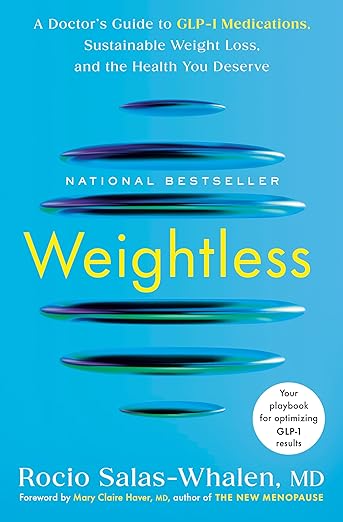
Weightless by Rocio Salas-Whalen

This book was recommended by a chat group on the WW app. It came out in December of last year, so it's quite up-to-date. I consider myself well informed about GLP meds, but I learned a lot from this book. I listened to it - 9 hours over the course of a week - as if it were a novel. I found it so useful that I've now ordered it to get a hard copy delivered. I love to listen to books, both fiction and non-fiction, but the listening format makes it very hard to go back and reference something. Even ebooks sometimes make it harder to look things up. I am a huge ebook and audio book fan, but if I'm going to be flipping back and forth through a book I prefer to have a hard copy in my hands.

The author has been a long term specialist in obesity medicine. This book is soup to nuts, from the history of obesity treatments and the development of GLP meds, to current options, what to expect, how to handle issues, and what to expect and options for handling maintenance. And like every self-improvement book you've ever read, individual stories:  "Carol was frustrated. She came to me because....".

She frames how to think about being on the meds as "creating a helpful environment for you to make the changes that will sustain you for the long term". In other words, the drugs don't do it, you do. And that takes work.

Here are some things that stuck out for me as I listened, that I want to go back and read more and study more. She is a fanatic on preserving muscle by eating protein and working out. She wants people to think of what we are doing is less about weight loss and more about "body recomposition". By this she means shifting the ratio of fat to muscle in our bodies. In her view, body composition analysis is how to determine if the process has been successful for you, not the scale readings. 

She writes about resistance and weight training, which I'm on top of. But she sets really high targets for the daily protein intake - for everybody, all ages and sexes, an absolute bare minimum of 100 grams of protein a day. This is significantly higher than the 83 gram minimum WW sets for me. I am close to that WW minimum almost every day, but raising it to 100 grams will be really hard. She is a big fan of whey protein powder, which I'm not ready to embrace. She suggests the best way to make the protein target is to add whey powder to everything, from your morning coffee (not gonna happen) to sprinkling on other meals, and also a shake/smoothie. (I'm not sure why I'm so reluctant to try the whey powder - I think besides my aversion to frankenfoods I'm afraid of aftertastes. But maybe I should experiment. At Whole Foods, I found an entire section full of different kinds of whey powder. So maybe? But not in my sacred morning black coffee!)

She also asserts that our bodies generally don't absorb more than 30 grams of protein at a single meal, and so making the 100 gram target would require three hefty meals and a hefty snack, or some pattern of spreading it out through the day. I have a long history of not feeling hungry in the morning, and working out first thing on an empty stomach. But if I'm going to get all the right eating in, I need to start early. I have to eat smaller meals, and I want to finish big eating a few hours before bedtime. So I've tried grabbing a lowfat cottage cheese (19 grams protein) directly I get up. I've tried to restrict myself to only a couple of (plant-based) protein shakes a week, so far after working out, because they are definitely a frankenfood (ultra-processed). But they are very convenient, from 20-30 grams of protein, and fairly palatable. I have been adding some ground flaxseed to meals where it is easily disguised - tasteless to me, not gummy like chia seeds, but some impact on texture and looks. I cook my rice and pasta in bone broth. My latest try - using my girl's vegan hack for parmesan - nutritional yeast, found next to whey protein in the supplements aisle. (I read the label for plant-based "parmesan" in the vegan case at the store - 0 grams protein and 0 grams fiber. Must be made from petroleum?) Results are not yet assessed on the nutritional yeast.

The one disturbing (to me) thread throughout the book is how the author assumes losing weight is everyone's goal. (Though only with preserving muscle, not skinny only.)  If she talks about body positivity, inclusiveness, and health at every size (HAES), I missed it or it didn't stick with me (another reason to have a hard copy to look at). Intuitive eating didn't work for me, but I've spent years coming to terms with how I look and feel. I don't hate my body now. I am quite healthy, and don't have co-morbidities from my obesity. But still, HAES is about being as healthy as you can in the body you have now. There are health impacts from obesity, and losing weight fixes many of them. But there are even more social impacts, and I hate that that is true and I think it's wrong. But still, I would like to look better in nice clothes. 

I've thought about this, and the fact that no everyone who wants it actually has access to the drugs is not a reason for me to not take them. My not doing this, as an individual action, helps no-one. The fact not everyone wants to, or can, take them is also not a reason for me to stay away. I support those who are happy with the way things are, or choose a different path for whatever reason. But I'm still doing it.

Friday, December 5, 2025

Full Scandi

I've decided to go Full Scandi(navian) this winter. I've decided to embrace the dark and the cold. And to do that, I'm all in on the warm and cozy clothes and blankets. I want to get out there every day, but dressed so that I can enjoy being out there. This is only partially motivated by my planned trip in January to the far north of Norway, into the polar night. It's also just a way of coping with the inevitable slog through this season. 

For the trip, I've got a new waterproof as well as warm coat, and a new pair of waterproof boots with a great luggy sole, for tromping through uncleared snow drifts. I already had a lot of wool clothes - I ol pants. I've got a couple of polar fleece sweaters, one pair of fleece-lined nylon pants, two pairs of long johns (excuse me, "base layers") and many wool and fleece hats and neck gaiter-scarves. I'm happy for the cold weather and today's snow as a chance to get out there and see what works. 

I went out for a walk at about 7:30 this morning, just as a full-on blizzard was starting. It was enchanting! The boots worked well, easy enough to get on and off, easy to walk in. I'd taken the hood off my coat, and wore just a hat instead. I was wearing a neck gaiter, and it got damp from snow coming down around the edges of my collar. The lined pants stayed dry on the inside. It only took a couple of blocks to realize I would be too warm if I kept going up hills. I circled around the hood, and after about a mile I ran into the neighborhood parents and kids at the elementary school bus stop. I stayed and chatted - the bus was runnng very late, so I was there for 20 minutes, giving the layers a chance to show how well they kept me warm when just standing around. I suspect my trip will have a lot of standing around, looking up at the sky.

Yesterday in contrast was sunny and cold, and Bixby and I took a very brisk walk around the 'hood. I was a fountain of energy around the house, spurred on by the sunshine. It was invigorating! There was a huge full moon last night, and Bixby and I took a few minutes to enjoy it outside. But I was pleased at the prospect of a darker day today, and planned nesting-type chores, slow cooking, and a fire in the late afternoon to keep things cozy. I have no appointments, no-one needing me today.  I filled up my on-hold queue for ebooks and audiobooks at the library this fall, with long-term wait periods - six weeks, 12 weeks, even 20+ weeks. But a whole slew of them have come through at once in the past week or so. I have to hunker down and read for real, not just fritter time on tiktok or bluesky. The audiobook that came through this afternoon turns out to be 32 hours long! I'm not sure I'll be able to pay attention that long! But with a fire in the fireplace to tend, and lego flowers and some coloring books, I can sit and listen a lot.

Every morning starts with stepping outside with my cup of coffee to admire the sky dressed only in PJs while Bixby uses his nose to catch up on overnight vistors to the yard. (I'm channeling my inner Cecilia, an Instagrammer who lives in Svalbard and does the same, in colder weather and with much more spectacular views.) I'm eating my ryecrisp toasts, and smoked salmon, and brown goat cheese. My homemade dishes tend towards cabbage and potatoes and savory lentils with coconut and curry. Hot tea appears in the evenings, sometimes with a slug of whiskey. I would really like to bake, but it doesn't fit with my current eating goals. Still, my girl is coming over tomorrow and there may be cookies in her plans, along with the Christmas decorating.

I'm definitely going for my maximum hygge. 

Tuesday, March 18, 2025

Input

My morning mass endoggenment
I have the ipad and coffee right there,
but it takes two hands to pet two dogs
As our world is burning down around us, I've been thinking a lot about modifying my consumer behavior - both where I spend money and where I get news and entertainment. I've had a ritual for a number of years now, in retirement, where I rise relatively early, let the dogs out while making coffee, and then settle down with my ipad to check in with the world. (First the dogs pile on me for a morning pet fest, topping up my oxytocin levels that decline overnight.) I have my routine: texts (they don't wake me up if they come in while I'm asleep), emails, blogs of people I know in real life. Then, a deep breath and the news. 

The news is bound to upset me, and I've learned to meter my input, checking my arousal level, and sometimes just walking away for a while. But this morning checkin is where I decide on my civic actions for the day. I write or call my federal representatives, or my state and local ones, almost every day first thing. (Not many calls, while I know they are supposed to be more important than emails, but I am very thoughtful in my phrasing in emails.) I might enter comments on some federal or local issue that has a public comment form available. I have a weakness for having to actually research a topic before commenting on it, clicking through to read source documents and think about it, so this is time consuming.

This is my main ipad screen with my news sources,
recently enhanced and rearranged so I can get at my most used
Links to email reps at the bottom

I have subscribed to the New York Times and the Washington Post for years, and since I got the ipad, I actually read or at least skim them every day. I am disappointed in their performance right now, but I still believe they have legitimate investigative journalists doing good work. (Their headline writers, on the other hand, suck.) Not only am I reluctant to deprive myself of these papers' content, but I am willing to pay to support them. I am working with many additional news sources as well, and increasingly I'm paying for them as well.

 I subscribe / pay for Vox, Pro Publica, the Baltimore Banner, the New Yorker, the Atlantic, New York mag, Heatmap, Wired and Rolling Stone. These last two have a surprising amount of relevant investigative journalism right now. I'm considering contributing to the AP - I only just realized it's not-for-profit. Heatmap is a climate newsletter someone I know writes for, I only read it sometimes. I subscribe to a large number of newsletters, most through SubStack, and I pay for a few of them.

I never watched TV news, ever. But I used to live on public radio. I've been contributing since right after college (the tote bag and coffee mug collections have finally been whittled down.)  I owned a radio for every room in my house. On weekends, I would turn them all on to the local station (WAMU, Shout Out!) while I did chores and projects. Now, I have Amaz** Alexas in many rooms, and I can with a voice comment turn them all to the station and hear it as I move throughout the house. But I want to meter my input of upsetting news, not allow random voices to appear and hit me in the gut with something with little warning. And so more often I tee up a podcast from my list, or a book, using the devices as bluetooth speakers for my phone. 

I will also play music throughout the house, either directly with a voice command, or again bluetoothed to  my phone. I also still have my big, dumb, ipod, loaded with many LPs and CDs I loaded into my computer as MP3s. Its battery has no staying power, but I have it plugged into a charger, and wired to a high quality speaker. Often I will put it on random shuffle from my entire collection of songs (about 100 hours worth!) and play it loudly while going about my business. It's pretty much guaranteed that every song on the ipod is something I liked enough to own at one time, and sometimes there is an unexpected pleasure from hearing something I remember only from long ago. Sweet!

Book options
Books are my big thing. I have a kindle and a kobo which are "epaper" readers. I much prefer them to long reading on the ipad - the screen is easier on my eyes and the device is much lighter to hold, and it's a great battery life for travelling. I find the epaper devices seamless to read on, a better experience than the printed page because I can adjust the font size and backlighting to the conditions. I'm trying to unwind myself from Amaz**, and it's hard. The public library offers a kindle option for most of their ebooks, and I usually go that route. In addition, a Prime membership gets me a couple extra free books (limited selection) every month. And many independent authors, self-published, are only available there. The kobo has fallen into dis-use. Recently, Bookshop.org has offered another alternative for buying ebooks. Their website allows you to choose an independent bookstore to profit from sales to you on their site. I've designated "Loyalty Bookstores", located in DC and Silver Spring. But their catalog is not extensive - especially in a back catalog if I find an author I like and want to catch up on all their books. And books bought through them have to be read on my ipad currently, though apparently they are in discusssions with Kobo. I have discovered there are some untethered chrome-operating system generic ereaders made. I was excited, until I researched on Reddit and found they are mostly made in China, system messages are in Chinese, and they require some savvy shenanigans to use. I'll stay tuned, but not ready to purchase yet.

I also listen to books a lot. Audible is the obvious choice there, and I've been on a subscription there since I bought my first ipod. Now the app is on my phone, but I can also download to my kindle, which can save phone battery while traveling. The Audible subscription level I'm on gives me access to a lot of no-extra-cost books, mostly back catalogues or indy authors. The library audiobooks are Libby, which works very well on the phone. I also use Libro.fm, which is affiliated with Bookshop.org and has the same deal of designating a local bookstore to share profits. I am currently also subscribed to Libro, but it has the same issues as Bookshop's ebooks in terms of fewer choices and no back catalog.

I use Goodreads to keep track of my reading, and to get updates from other people. It is owned by Amaz**, and when I finish and rate a book on the kindle, it automatically is registered in Goodreads. Books read elsewhere, or audiobooks, require entering manually. There are other social reading sites, Fable and StoryGraph, which are frankly better. Except, they don't have the automatic updating. I am a voluminous reader, and I like the convenience of the automatic updates. So I'm still on Goodreads for now. If my kindle reading declines, perhaps the convenience factor will too. (Both StoryGraph and Fable allow importing a Goodreads export, which captures all your history up to that point. But, that's a one-time thing and all future books have to input manually.)

John Scalzi has an excellent post that covers the nuances and pains of trying to disentangle from various Evil Empires run by oligarchs.  Two notable quotes: "Boycotts are a fuckin' slog, y'all" and "No ethical living under capitalism is a real thing". I'm sorting my way through the mess. I'm on Facebook and Instagram regularly, where I see posts from people I know in real life and want to keep up with (I post very rarely). But I'm not on Twitter nor Threads, though I have IDs there. I've been a Prime member, and I'm not turning that off right now. But I'm trying to go to other sources for things, with mixed success. Covid tests available for same-day delivery via Amaz** took eight days to arrive when ordered direct from the manufacturer. A maintenance item I needed was only available via Amazon - the manufacturer's website pointed only there. Whole Foods has been my major grocery store (visited more than once a week last year). I've joined the local food coop and checked out Mom's Organic Market (local chain, twice the distance). Both are less convenient - I often would drive to the WF parking lot, where I could also go to the farmer's market, hardware store (employee owned!), CVS, and library all in one trip. Shall I spend more gas driving around for errands? Nuance and trade offs, guys.

BlueSky has definitely hurt my sleep. I've turned on controls on my ipad - BlueSky is limited to 25 minutes a day, and the whole ipad turns off at 10 pm. Controls are easily over-ridden, but at least it's a conscious decision. 

Thursday, October 31, 2024

Three Windows to the Twentieth Century

 Three of the best books I've read this year are history / historical fiction set across the breadth of the 20th century. They are hugely different from each other, but all resonate with me on where we are now. In chronological order as they are set (which happens to be the reverse of my reading order):


The Hired Girl, by Laura Amy Schiltz

A young girl in the early days of the 20th century is determined to improve herself. I was impressed by her strength of character and determination in the face of great obstacles. As the book opens, she is in such dreadful circumstances that I wasn't sure I was going to be able to persist. But things brighten up, as she takes action. An unusual element of this book are her struggles with faith, as she figures out what her Catholic faith means to her, and she struggles to understand the Jewish family whose house she works in and whose family members interact with her. It is overall an optimistic book, leaving me feeling refreshed for knowing there is goodness in this world. Fans of Little Women will love this.


Munich, by Robert Harris

I stumbled upon this book. The author has a new book out with a favorable review in the paper. When I went to see if the library had the new book, there was a year-long waiting list. As I often do, I checked to see what else this author had written that might be available sooner, and ended up with this. (Note, I listened to it, didn't read it.)

We probably all know this much: Prime Minister Chamberlain went to Munich to meet with Hitler, sold out Czechoslovakia with his explicit policy of appeasement, and he came home to England three days later proclaiming he had ensured "peace in our time". War broke out less than a year later. 

This fictional story is entirely faithful to the known facts, who was in the room when, who said or wrote what. But it's told from the point of view of two fictional young men, one English and one German, who are minor functionaries for their respective governments, and who have a complicated intertwined backstory. They are present as all the big decisions are thought through and finalized. It gave me new insights as to why Chamberlain did what he did. I still think it was an infamous act. But the strong motivation to avoid war at all costs has its attractions and it is presented with context. But the scenes with Hitler, irrational and frightening, gave me chills. Please save us from crazy dictators!

An Unfinished Love Story, by Doris Kearns Goodwin

I have read several books by Doris Goodwin before, biographies and memoirs. At the beginning of her career, she was a White House intern on Lyndon Johnson's staff. After he left the White House, she worked for Johnson, organizing his papers at his ranch in Texas. In all of this, she just missed crossing paths with her future husband, Dick Goodwin, ten years her senior and predecessor at the White House. Dick Goodwin was one of John Kennedy's earliest staffers, one of his principal speechwriters, and became a confidant of Jackie Kennedy. After the assassination, he stayed on at the Johnson White House for a time, and coined the term the Great Society. His opposition to the Vietnam War put him at odds with Johnson, and he became one of Robert Kennedy's earliest supporters, and was present when he was shot. 

In this book, Doris G. chronicles how she and her husband went through his boxes and boxes of papers and memorabilia from that time, recreating in detail many pivotal moments where Dick G. was present. Further, she follows up on many of the those moments, going beyond the personal history to bring us up to date on what happened since, what was the lasting impact of those times. 

In these discouraging and cynical times, it was eerie to transport myself back to the time when it seemed the world was changing so fast for the better. It did me good to be reminded (or made aware) of one of the most productive and positive times for our government. In the space of two years, the Civil Rights Act, the Voting Rights Act, and the foundational legislation for the Great Society: Medicare, Medicaid, Head Start, federal aid to education, the War on Poverty, federal minimum wage, urban renewal (OK, that one maybe not so great). Per Wikipedia: The Johnson Administration submitted 87 bills to Congress, and Johnson signed 84, or 96%, arguably the most successful legislative agenda in US congressional history. Sadly for the country, the world, and Johnson himself, the Vietnam War choked off funding and focus on implementation of this agenda, but many of these programs are still with us today. 

But even the story of Vietnam resonates with messages of inspiration for today. Eugene McCarthy ran an upstart challenge to the Johnson re-election campaign, and succeeded in making Johnson withdraw, but he still lost. There were twists and turns - Robert Kennedy entered the race and divided the challengers, was killed, and McCarthy took the banner back. But by the time of the Chicago convention, conventional wisdom and a centrist Democrat, Hubert Humphrey, was the weak challenger to what has become the mostly-Republican government that we have known as adults. But Dick Goodwin was there at many of these crucial inflection points, lending an immediacy to the telling of events that kept me enthralled throughout this book.


Thursday, December 7, 2023

Comfort Food and Sour Pickles

My knee recovery continues. Sadly, my stomach problems continue as well. I stocked up on food before the surgery, but sadly much of the food I stocked up on isn't suitable for my temperamental acid stomach. For example, I adore Trader Joe's Palaak Paneer, thinking of it almost as a pudding, soft nursery food that doesn't need chewing. But while Indian food folks would consider it bland, I normally cool it down with yogurt or creme fraiche. But I'm not considering trying it for a while. I do have plenty of actual truly bland food, and basics to make more (scrambled eggs coming into their own), so I'm fine for supplies. But it made me think about what gives comfort.

My job is to recover, and in between home exercise bouts and off to PT, I'm consuming entertainment at an unprecedented rate. But it's all comfort food. I'm not looking to be scared or disturbed. I want happy endings. I normally feel guilty about this, and stack up my book and movie queues with some more challenging material, my sour pickles that add interest to a bland life. But right now, nope.

After going literally months without watching TV, I reviewed my watch lists I have set up. Imagine my delight to find a British detective series I love, Shetland, has not one but two seasons out I haven't seen. I have also watched older movies (The Big Year, about bird watching!) and will be looking at the list for more. John Scalzi is doing a blog series on "comfort watches" and I'm adding to my list from his suggestions. I'm not big on re-watches (too many new things out there) but some movies truly stand up over years and repeated viewings. I'm thinking I'd love to introduce my girl to A Fish Called Wanda, one of the greats.  

I constantly keep a queue of ebooks and audiobooks on request at the library, and many of my sour pickles come from there - books that I hear about from reviews. But I'm ruthless at abandoning them if I'm not swept away (in a good way) before very far into the book. I don't know if I'll go back and try them again when I feel more resilient, or if they had their shot and I'm done. I've been listening to books (as opposed to reading) more than usual, and again, if it doesn't engage me, it's terminated quickly. Whether reading or listening, my usual mix of mysteries and thrillers is holding a much larger percentage of feel good books. I'm not sure of the category, there are apparently romances and women's fiction and book club books, I don't know how they sort out. Some of the ones called romances are so bad, predictable and pablum, that I can't handle them either. Right now, I am enjoying Elin Hilderbrand books: all with a connection to Nantucket, with characters who make bad choices but are not bad people, and who get through bad things happening. And not always paired off, either. But they are all OK by the end.

I find science fiction and fantasy to be really a crap shoot. I found a series with good values and plenty of snark, called "Murderbot", and saved up the latest for the day I came home from the hospital, and it did not disappoint.  But the author, Martha Wells, came out with a new fantasy series, and I slogged through the first third of the first book, to find the world-building tedious and overdone. Too many characters and races and types of magic being introduced, and getting in the way of bonding with the characters. Sigh.

I do read (mostly listen, actually) to non-fiction. This is the white rice of my entertainment stream - mostly history. My Audible membership gives me access to a pretty extensive catalog of older, less popular, audio books without having to buy them separately. So I've listened to a biography of Chaucer, another about the place of women in Tudor society, and I have more like that coming up. I like this very sedate but just enough intellectually engaging books as background to other things. Generally, I'll cue them up at bedtime. Guess what? If I fall asleep before the automatic cut-off, I may not rewind to catch what I missed. Who cares? I'm learning, but there won't be a test at the end so it's ok if I miss something. 

My latest jam is actually a podcast, though I'd put it in this history category. It's done by the public TV station in Boston, and it's an 8-part series about the Big Dig. Huh? I hear your minds whirring - what? Really? But yes, really. I am a YIMBY, sick of years of our not being able to build things, to carry out ambitious, big projects. The Green New Deal inspired me. I also spent some of my career at the US Department of Transportation, and I witnessed many infrastructure projects start and stop and be delayed and sometimes be killed, while others that ought to have been killed went steam rolling ahead. One of my work hobbies was reading Inspector General reports on topics related to my work (dealing with reports tied to my work was anything but fun, but we know misery loves company). The Big Dig was a multi-year field day for the IG. So this series starts way back in the 1960s and covers the personalities involved in Massachusetts and Boston politics, and the genesis of the project. I can picture some of the meetings and events described - I've been in the Secretary of Transportation's office while the fate of things like this were decided. I'm about half way through, and funding for the project was just approved in Congress, over-riding Reagan's veto. I know the ultimate outcome - my boy living in the Boston area benefits from the completed project - but I'm curious how they got there, and how common myths about events along the way have evolved.

Friday, January 6, 2023

Let's Put 2022 to Bed

 Let's wrap this puppy up. While I didn't do a lot of posting about the metrics of my life, I did keep up my spreadsheets and graphs. I find it is helpful to have a "just the facts" look at how my life is unfolding. Memory is unreliable, and these numbers tell a story.

Here is 2022 by month, and yearly totals for the last four years. In general, darker is better. 
I put migraines in red and reversed this (darker is worse).  And in the bottom (yellow) section, I'm not sure more is always better - more books, for example, is not always better.

 The whole overview of the year is above, complete with context from prior years. Looking first at the yearly trends, look at the first section - activity measures. It's been downhill since 2019 (when I retired partway through the year). But I managed to turn around the downhill trend on some of these things - 2022 was more active by some measures than 2021. This was and is a hard fought battle. I didn't bike at all, I ran one whole mile, but I did get out there and walk! But not every day, by no means. I had more low activity days (days with less than 5,000 steps) than ever before, by a fairly wide margin.

The next little section shows the sad story of my weight - after holding it steady for the previous three years, I put on fifteen pounds and tied with my previous all time high. Let's just leave that there for now.

The next section contains some measures of wellness. I fell off the formal meditation bandwagon big time, this year. I believe I incorporate moments of mindfulness throughout my life in ways I didn't before I started meditating, but I don't sit for a practice much any more. In fact, many of the times I show I meditated, I put on a recorded meditation in the middle of the night in order to try to get back to sleep. In good news, migraine hours continue to decline! Two months with NO MIGRAINES at all! Woohoo! Sleep is relatively steady, and resting heart rate bounced around during the year, but the overall average didn't change that much.

The last section tracks various enrichment things. Again, these are not necessarily the most important things, but are things that are relatively easy to track and do show some softer aspects of my life. I was a reading machine this year, I wish I'd seen more movies, I hardly blogged at all, and likewise I failed to enjoy the delights of the city and city friends. But I traveled a lot, and I got a decent amount of sailing in. 

I've found the story of the ups and downs of the year are best captured in a graph of my daily steps throughout the year.

The dots are the daily step totals. The dark blue line is a running monthly average, and so shows the longer term trend hidden within the noise of daily variation. The lighter blue line is a running weekly average, so shows a shorter term trend than the monthly one.

So follow along the graphlines to read the story of my year. We start with an optimistic and motivated January, with several very busy days, followed by a steady decline in late winter and early spring as the bad weather and my bad knees dragged me down. There were some high points, but the trip to the Utah desert in March was disappointing as the weather kept us in. The weather got better during spring in Maryland, and I went out to California in April and I walked my brains out. Back home, I tried to get off the couch to train for my trip to the Nordic Isles in June and July, but pretty much I just hoped for the best and as a result I failed to enjoy the trip as much as I could have. I overused my knees and was often in pain.

I vowed to do better for my planned trip to Greece. We see a steady increase in average steps, facilitated by cortisone shots in my knees at the end of August, and steady physical therapy during September and October. Greece went really well, until I got covid

So the rest of the year was in the cellar, with constant struggles to get off the couch and move. The month of December has the lowest average steps of any month in years. It also has the most number of very low activity days. So I went on some walks, but consistency is lacking.

Steps are clearly a proxy for overall activity, but I think it's a pretty good substitute. I know that studies have shown that there is a clear relationship between few steps and all-cause mortality. From 4,000 steps a day to 8,000 steps a day, there is a clear relationship where more steps and better health are very tightly correlated. This is a correlation, and there is NOT a clear demonstration that moving from fewer steps to more steps results in better outcomes. It could be that folks in an unstoppable decline walk less. Is there such a thing as an unstoppable decline?

I don't want to end on a sour note, so let me say that right now, in the beginning of January, I feel pretty good, and very motivated to keep moving. I know deeply that moving more makes me feel better - there can be a virtuous spiral upward. So let's leave last year behind us, with maybe a few lessons learned, and go forward to the new year.

Wednesday, December 21, 2022

My Year in Books


OK, I read a lot this year! I actually had a goal to read slightly less this year than last, but here it is, more than 200 books, versus my goal of 150. Last year was 185, and 2020 was 180. The reason I set a lower goal is because I believeI spend way too much time on the couch reading. I do some listening to books which allows multi-tasking, but more than 2/3 of these books were read, not listened to. And, most evenings end up with me on the couch playing idle nonverbal games on my ipad while listening, so not so much multi-tasking going on. I've got to get some new hobbies, or sign up for additional volunteering!

I read most of these books on the kindle (70%) and when I finish it, it posts automatically to GoodReads, simplifying the keeping track. I manually enter hard copy and audio books, though I'm not so accurate in getting that right. Still, I think this is pretty good. (Actually, I just found a half dozen Audible books I hadn't added but I just did; not reflected in these totals!) And, of course, GoodReads makes the graphic, and also allows exporting to excel to make your own statistics. 

Folks, I only acquired and read less than twenty books on my own this year - all the rest were library books or audio books! Let's hear it for the library! Especially because my habit is to find an author I like, and then read my way through the entire oeuvre. The digital service my library uses tends to have all-or-none of authors I stumble across. With ten spots for checking out books, and another 10 to join waitlists, I keep them coming. 

I grade on a curve, and I think that makes me a harder grader than many others. In fact, a quick scan shows my score is higher than average for only six books this year. I assume a book will have three out of five stars, and it needs to be very good or very bad to deviate from that. So the graphic above shows the only three five-star books of the year. Here is a quick recap of them:

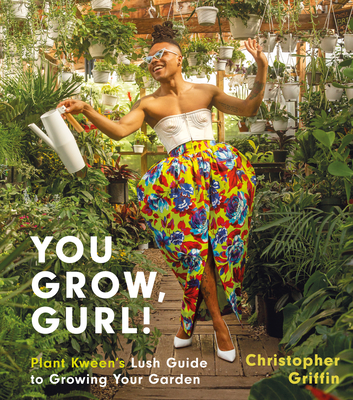
The absolute BEST indoor plant book! And Christopher Griffin, the Plant Kween, is the cutest guy I know - I found him on Instagram before I bought the book. So this book is luscious in its photography, but serious in its plant information. Latin names, proper botanical terminology, very precise notes about care. But luscious! (Bonus for Brooklyn readers: It contains portraits of the best plant shops to be found in the borough.)


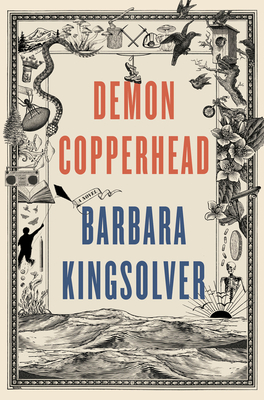
Written entirely in the first person, this is a sprawling and moving book. VERY faithful to David Copperfield, which I read as a child. I had to get a plot synopsis of the original, which was fun then to figure out the modern characters, though it did result in hints of spoilers. Most of the books I read this year, the typical mystery, takes maybe five hours to read. This was more like fifteen! But worth it!


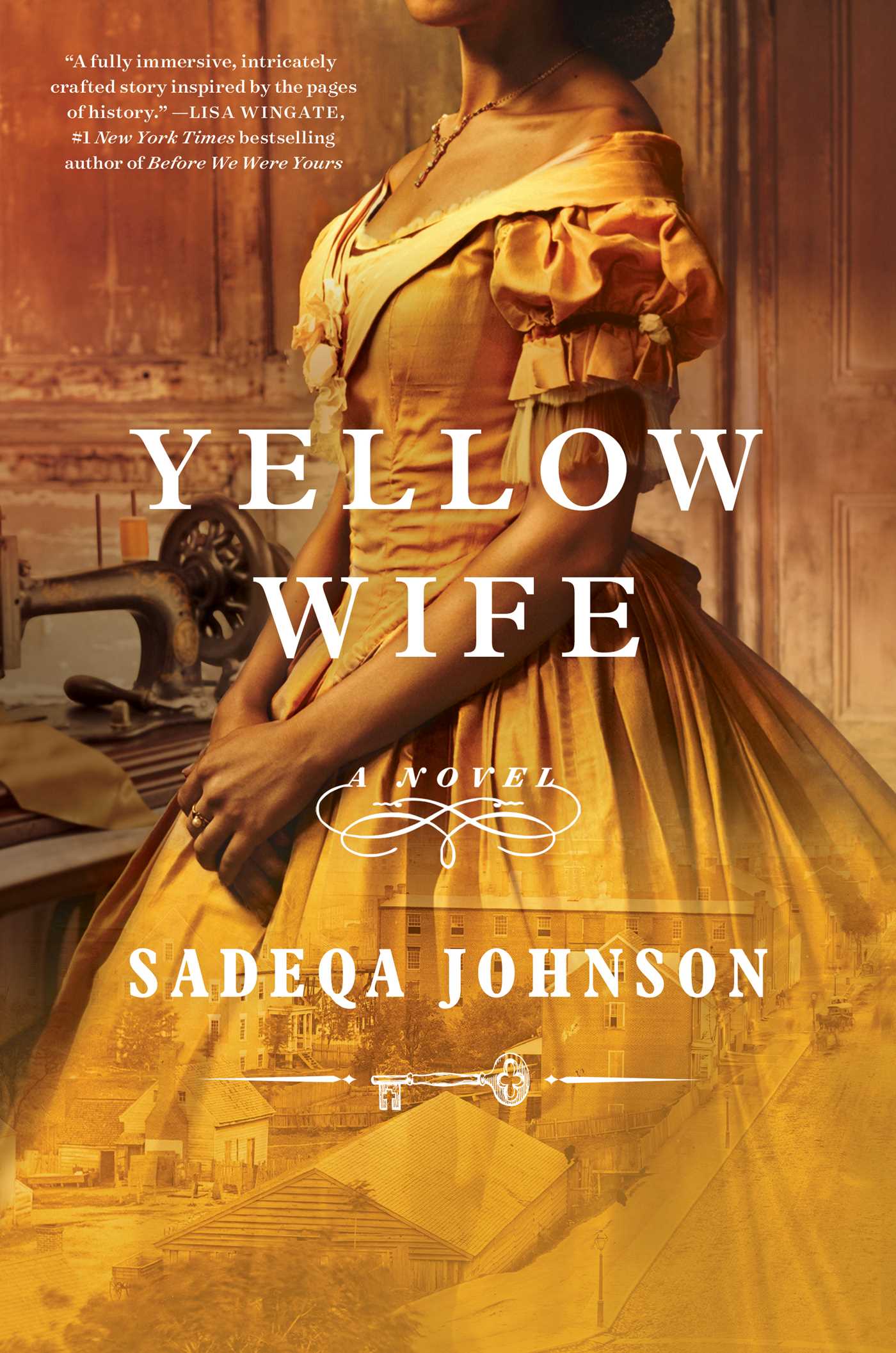
The story of a woman enslaved by her father, and how her life evolves as her circumstances change. Very moving depictions of the compromises made to survive. There is an historical note at the end, showing how this is closely based in reality. Not so very far from here, in place or time. It really gripped me.


 I rated just two books at two stars. One was really a short story; it seemed to me to be just exploiting the popularity of a series and squeezing some extra and unnecessary and not very entertaining mileage out of it by tossing in this story. The other was an historical mystery set in England in the early nineteenth century, the first of a series. I didn't even finish it - very rare for me - because I couldn't handle the historical anachronisms and inaccuracies, right down to rich people routinely drinking water. (Water wasn't safe to drink.) When I checked reviews on GoodReads, it turns out many others also noted these problems.

 My book count is up this year partly because I read more books written for children and teens. They go quickly, and can be very engaging. The bulk of these were fantasy novels. I raced through a series, The Ranger's Apprentice, that basically eschewed magic for craft and skill to create fantasy adventures in a imaginary medieval world (with a million anachronisms). With two offshoot series (new characters, same world, some overlap) there were a total of 25 of them! 

I whiled away much of my Covid isolation by re-reading a fantasy series by Megan Whalen Turner, The Queen's Thief. The big idea is a world much like Greece in the sixteenth century, but with different geography and a different pantheon of gods. I had read all six books a while back (written from 1996 to 2020), but downloaded them to the kindle to take along with me to Greece. There are conflicts ranging from families to nations to international dynamics, as the "Medes" (think Ottoman Empire) continually try to take over the Greek pennisula, with the (European analogue) "Great Powers" on the other side maybe or maybe not helping out the three squabbling Greek kingdoms. Nothing is as it seems in any of these books, told from different points of view. I hadn't read the last book, and the others had been read so long ago I had forgotten a lot. (Hey! In double checking the dates, I just discovered a new book out this year! A collection of related short stories and trivia to supplement the series. Happy Christmas to me!)

Nearly half the books I read this year were mystery novels, many of those in series. (I don't distinguish between mystery, thriller, suspense, spy, and related concepts, just lump them all as "mystery"). There was a charming and lighthearted series by Rhys Bowen called "Her Royal Spyness". Our heroine, when we meet her, is 25th in line for the British throne, but penniless and having to survive by her wits. Downton Abbey meets Dorothy Sayers in the 1920s, with fifteen books in the series so far. The author is prolific beyond this series, but I've not really sampled her other stuff. A more hardboiled series I'm nearly caught up with is the Walt Longmire set, by Craig Johnson. He is a sheriff in the least populated county in Wyoming. The descriptions of the physical landscape are gripping, and many of the characters are Native Americans, as there are a lot of tribal lands around. There is a TV series out, Longmire, inspired by these books but not at all a literal translation to the screen. I watched just the very first episode, and put it on my ever growing "to watch when I have time" list. My favorite mystery writer ever, Louise Penny, had a new volume out from her Inspector Gamache series which I devoured in previous years. The latest is one of the best ever. There is also a brand new television series, Gamache, out as of early December, again inspired by the books but not a literal translation. I've watched the first two episodes, and will watch the rest of the 8-episode season soon. 

There isn't a clear line always between fantasy and science fiction, but I do try to break them apart. I'm drawn to these genres because, as long as you are making things up, you can create a really appealing world, one I might like to visit. Many of my science fiction reads come from John Scalzi's blog, where he devotes space to allow authors to promote their books by talking about what they were trying to convey in the book ("The Big Idea"). An author I stumbled onto from the blog, Becky Chambers, is fabulous. The first book of hers I read is set in a universe she uses for several other books, but she focuses on different characters in wildly different settings. My favorite of this year (4 stars!!!!) is The Galaxy, and the Ground Within. The story takes place in a hospitality rest stop for interstellar travel, where a half dozen characters from different species from different planets are stuck together during an unexpected delay of undetermined length. Complex tensions and interactions ensue, but they all pull together in the end to save an endangered child.

An unusual book I read (also tipped off by Scalzi's blog) might be in the mystery genre or in the fantasy genre. The Peacekeeper, by B.L. Blanchard. It is set in an alternate world where the Americas were never colonized, and the Ojibwe nation surrounds the Great Lakes. There are crimes and mysteries, but "justice" is different in a society where restoring harmony is the main role of peace keepers. The physical description of an Objibwe Shikaakwa (Chicago) reminded me of the Afro-futurist vision of Wakanda, but with a Native American orientation. Refreshing! And a very good contemporary novel, Firekeeper's Daughter, by Angeline Boulley, is also set in Ojibwe culture, but in our world. Another hat tip to Scalzi's author's platform.

I read four books by Connie Willis, which share a common plot device - time travel is possible and Oxford University sends back scholars and historians to view historic events. Two are WWII in England books, one mixes WWII with a lighthearted take on Victorian England based on the Victorian book Three Men in a Boat by Jerome K. Jerome, and one takes us to the Black Death. They are entertaining in different ways, and transporting a contemporary observer to these settings makes for interesting situations. Recommended.

OK. Time to investigate new hobbies, other ways to spend my time.

Tuesday, June 21, 2022

Reading Science Fiction and Fantasy


I've been reading a lot. Possibly too much, but that's a post for another time. I have thoughts about science fiction and fantasy stereotypes and tropes. This post was prompted by a friend sharing an essay on similar topics, linked to here.

I discovered science fiction in eighth grade, starting in my school library with Robert Heinlein. He had a book, Podcayne of Mars,  which features a 15 (earth) year old girl. She had agency and wit, and it started me on the genre. Reading the wikipedia summary today, maybe she had a little less autonomy than I remember. I continued with SF throughout my high school years. I don't much remember any authors besides Heinlein and Isaac Asimov, though frankly Asimov wrote enough to keep any single mortal busy anyway!

I started in fantasy at about the same time, though I don't remember much except for Tolkein, and The Last Unicorn, considered one of the best all-time fantasy novels. One of the synonyms for "fantasy" novels has been "sword and sorcery". More on the sorcery aspect below.

When I was a freshman in college, I took a class in science fiction and fantasy literature. The required reading expanded my horizons significantly. That's when I read, for example, Dune. And a great deal of Kurt Vonnegut. I don't know for sure, but I strongly suspect everything on the reading list would have been written by a man. Even "James Tiptree, Jr" was not publishing novels back then, and it wasn't until much later it was known she was a woman.

I remember having an argument in that class about women's roles in this literature. My point was that if you were inventing a world, there was absolutely no reason to perpetuate the sexist roles that exist in this one. Evil sexist people and societies might exist, but clearly their sexism was only an aspect of their evilness. Not everyone agreed with me - this was 1973, after all. 

It was only later that I found Vonda McIntyre, Mercedes Lackey, and Ursula LeGuin, as the first women of sci fi and fantasy. By imagining worlds free of our constraints, they expanded my own imagination into what would be possible in our world. Dreamsnake by McIntyre blew my mind. Arrows of the Queen by Mercedes Lackey captivated me and, as it the first of a considerable series, the author held my attention for quite a while. (According to Wikipedia she has published over 140 books! No wonder I haven’t read them all.) I sought out only books written by women for a while. Now, there are also works by men like John Scalzi. He has written some books where the main character, the narrator, is actually ungendered. Through the whole book, you don't know. I was chagrined to only realize this having read a whole novel like this. Throughout the book, my notion was the narrator was a man (after all, it was written by a man). But I read a blog post about it, and realized that it was never made explicit throughout the book.

I am sad to say that my awareness of racism in speculative fiction took much longer to awaken. There was no overt racism in any of the books I liked, but also there tended to not be any characters of color. That gradually changed, and frankly Star Trek was a leader in this area. But gradually, I have grown uncomfortable with the concept of whole races of non-human beings who are just plain evil, serving in some ways as a proxy for racism. Creatures like Orcs in the Lord of the Rings, non-human characters one can kill with a clear conscience. 

I've also grown impatient with the tropes of the semi-human magical race, and of the "chosen one" who alone can save the world (or the universe), due to some inherent quality born into him (it's almost always a boy). There is sometimes a theme of people with special abilities being persecuted and exploited, when they are clearly actually superior to ordinary humans. Huh. 

I remember reading an alternate-history book that took place with a Roman Empire that lasted through the 18th/19th century. There were excellent characters struggling with colonialism and identity, and a fun political setup. But then our main hero had to go off on a quest in the desert to find her magical heritage. The book was so interesting without that unnecessary bit, and I found it obscured the more interesting themes. Who even needs sorcery?

Lately I've been indulging myself in a series of (YA) fantasy novels, the Ranger's Apprentice series by John Flanagan. One of the appealing things about this book is the (almost complete) absence of magic. There is an evil race of beings that appear in the first couple of books, but in the many books that follow, they aren't there. I think Flanagan may have realized how they didn't help his stories forward. There are definitely people who are very, very, even unnaturally, talented in certain areas, but they tend to also utilize hard work to make the most of their talents. It makes it a much more comfortable world to indulge my imagination in. I could picture myself there happily. And I think that is often the point of fantasy novels.


Tuesday, January 4, 2022

Intuitive Eating


It turns out Intuitive Eating is a Thing. It's even known as IE to its adherents. Forthwith, my exploration of IE with my thoughts.

I found IE (the Thing) from a podcast I follow, Ten Percent Happier. The interview was with Evelyn Tribole, one of the authors of Intuitive Eating, the book which is now in its fourth edition, and several other related books. And founder of a nutrition practice that trains Registered Dieticians and nutritionists to be Anti-Diet Dieticians. The focus of the podcast series is mindfulness, and in this episode Tribole gave her distinction between mindful eating and IE: mindful eating is a specific practice engaged when eating, while IE is a set of principles for living your life with a healthy relationship with food. One could engage in mindful eating while still having an unhealthy relationship with food. 

As is my wont, I plunged into this thing. I got the basic book from Audible where it was included in my membership and I listened to all 13+ hours in three days. I bought in hardcopy paperback the associated workbook, and joined a Facebook group that gave a quiz before they let you in, and an essay exam before allowing you to post. 

So quick warnings before going further:  This is the Anti-Diet, and will go against most of what we think we know about how to eat to accomplish our goals. And, it forbids having certain goals. And it denies what we think we know about how our bodies work. It denies there can be such a thing as a Food Addict. And, it comes across to this skeptical cynic a bit like a religion, because if it does not "work" it is because you, the failed practitioner, don't believe in the principles enough. This is one of the symptoms of a cult. 

So I am an IE skeptic. I am not all in. I think there is a lot of value here, and much of what they say about dealing with food is very healing. And a lot of it is very compatible with what I have come to believe about food and dieting overall. But the way it is written seems to be aimed at an audience that is in a much different place than I am. And some of it rings false with my own experience and evidence, not just beliefs.

So here are the ten principles that compose IE, the Thing:

  1. Reject the Diet Mentality
  2. Honor Your Hunger
  3. Make Peace with Food
  4. Challenge the Food Police
  5. Feel Your Fullness
  6. Discover the Satisfaction Factor
  7. Cope with Your Feelings Without Food
  8. Respect Your Body
  9. Exercise: Feel the Difference
  10. Honor Your Health: Gentle Nutrition

The first is the big one. Reject the diet mentality, reject everything about diet culture, and here's a big point: do not try to lose weight. As long as you are trying to manage your food with the intention of losing weight, you will never make peace with food. A large part of the thinking is based on the psychological principle that restricting something leads to future rebound - the forbidden fruit tastes sweeter.

I am fully on board with the concepts of body positivity, health at every size (which is also a Thing, HAES), and the evilness of the enormous exploitative economic machine that is the weight loss industry. I fully acknowledge most attempts at long-term weight loss fail, and how much money is to be made in that fact. I've felt the effects of how denying something can lead to obsessing about it.

IE also fully recognizes that our society has a strong anti-fat bias, and that makes it difficult to give up the idea that being thinner is a good thing. And, in some cases, being fat causes economic losses and bad health care from medical professionals that can't see beyond the number on the scale. But, they counter, since almost no-one succeeds at long-term weight loss, and there is strong evidence that weight cycling is very bad for your health, there is no point to trying one diet after another, even if from time to time you are thinner. This condemns you to a life of never being happy with where you are and never being comfortable with food.

IE does not promise that if you fully embrace the process leading through all their principles and then practice them in your life, you will as if by magic end up losing weight after all. Instead, they say that you will simply lead a happier life. And be healthier, if only from stopping weight cycling. I sense a hidden footnote there, maybe it was in the earlier editions of their books, that many people do eventually end up at an equilibrium at a lower weight than where they started out. 

They state that during the earlier stages of their process, many people initially gain weight, as folks move through the first four principles in what they describe as a "re-feeding" process where all food becomes "emotionally equivalent". And they have that word "initially" in there, as if they are suggesting that as people internalize principles five through seven, where you learn how to stop eating, weight starts to come off. But they never say it. Principles eight and nine are to learn how to love your body and exercise only for the joy of it. And only at the end do they bring up the notion that while any and all foods should be emotionally equivalent, not all foods are nutritionally equivalent. 

Much of the practices are geared towards being mindful of and in your body. In my chronic pain practices we call this somatic tracking. In IE, it's called interoceptive awareness. (You've heard of proprioception? The sense of our body in space? This is the sense that goes kerflooey when vertigo strikes, and can cause sea sickness when screwed with. Well, interoception is internal sense of our body. They are real words, but spell checker doesn't acknowledge them.)  Feel and acknowledge and feed hunger, and rely on the wisdom of the body to determine what and how much to eat. As noted before in this blog, as if. This is the holy grail, and I believe it is the right way.

I think these books are geared towards people who are much more immersed in Diet Culture than I am. And I say this as a person who has for twelve years blogged on my diets! Perhaps at earlier times in my life I was much more of a true believer in The Way to lose weight. Perhaps I have demonized foods. But maybe because I have been both analytical and introspective about what I was doing, and because I've always considered myself a skeptical cynic, and because I have become much more tuned to my body through mindfulness and dealing with chronic pain, many of the exercises in their workbook don't work for me. But some do. (I wrote about my movements towards being more at peace with food just before I fell down this IE rabbit hole.)

My main caveat about IE:

I have engaged in weight cycling, but I also have not in 24 years gone back to my top weight. I am happier for not being that roly poly. And I'd like to be less fat in the future, I'm not willing to fully embrace this weight. So with that shred of doubt, I'm not a true believer and thus IE will not "work" for me.

Other bones to pick: 

  •  I understand what they say about not demonizing foods, but foods will never be "emotionally equivalent" for me. There are memories and associations, and there are past somatic experiences, and there is knowledge about nutrition, and even often knowledge about the source and environmental footprint of how how food got to my plate. They do not embrace vegetarians and vegans, apparently believing most get there from a health rather than an ethical or environmentalist viewpoint, and any forbidding of food is anathema to them.
  • For folks trying to make foods emotionally equivalent, to my eyes they push grain-based carbs rather hard. (Perhaps someone from a different diet history would think they are pushing fats too much.) 
  • They discount fresh foods, and think fruit has no staying power (can't disagree) and think vegetables also have little staying power (I disagree) though they list fiber as distinct from vegetables and like fiber. 
  • Their workbook has good exercises to do - vary your lunch, for example, while keeping other meals equivalent for a couple of days, and mark down experience with hunger and satisfaction. But the accompanying worksheets are prepopulated with examples that show their biases, which don't always correlate with my own experiences. For example, sandwich lunch versus salad - their "notes" example say salad didn't hold them the way the sandwich did, because the bread helped - but they assume a skinless chicken breast and fat free dressing on the salad, when I load my salads with things like olives and sausages and find the combination of fiber from the greens and fat and protein hold me much better than a bread heavy sandwich. (This is just one example, there are many). 
  • We know the food industry works to increase palatability while delaying satiety in an effort to get us to eat more. This is not addressed. I'm not sure I'll ever be able to rely on my body to overcome the forces arrayed against it - except by eating real, whole, foods that haven't been subjected to industrial dark forces.
OK, enough for now. I'm continuing to figure things out, based primarily on my own insights leavened by reading. But I want to focus these first couple of months this year on getting strong more than what I weigh. That requires getting up off this couch!


Tuesday, December 28, 2021

Book of the Year

The book I finished yesterday was SO GOOD! This is a history book, told in stories and digressions and investigations and research, very much non-linear. Not at all my usual style. In fact, it took me a while to get into it - I kept it on my kindle for longer than the three week library checkout period, and read and listened to some other books between starting and finishing it. But it gripped me, even from the beginning. I just found it hard to sit down and read straight through - it lent itself to more piecemeal reading, partly because it is not a linear narrative. 

An object, passed down through a series of black women, inspires an exploration of what life was like for these women. But beyond a gripping and at times heartbreaking close look at black families' lives down the centuries, the book provides incredible context, from the origins of the South Carolina colonies to how pecan trees are propagated, in a few number of pages. The writing is luminous, not a word wasted. 

And that's not all! The author writes of the power of objects and story-telling, in a powerful demonstration of why these things matter.

So many levels! So much research! So much love and heartbreak! All in a non-fiction academic history book, jammed with footnotes, which was partially funded by a federal government grant to the arts. Way to go, my federal government!

Runner up, non-fiction:

This book I heartily recommend as an audiobook. True confessions, this book was written by, and the audiobook is performed by, my neighbor, friend, and storyteller teacher, Noa Baum. This is both her personal story, and the story of the heartbreak that is Israel, the land eponymously twice-promised. She does voices and accents in her performance of the audiobook. Again, I could not make it through this book quickly, but visited it periodically over several months. But it is fabulous, and heartbreaking, as there are no answers.


Runner up, fiction:

This book is listed under "children". It took me about three to four hours to read, and it has no actual sex, so I guess it is not YA. It tells the story of a girl left behind as everyone leaves her town, in contemporary America. Self-sufficiency, courage, resourcefulness, sorrow, it's all there. It pays explicit homage to the Island of the Blue Dolphins, one of my favorite books of all time. I loved this book, and couldn't put it down once I started it. Well worth the quick trip.


I read/ listened to more than 180 books this year, guys, but these three stand head and shoulders above the crowd. I think I'll probably browse back through the list again, and maybe offer some other recommendations.

Sunday, December 5, 2021

Satisfied

I'll never be satisfied!

I've been embarked on an odyssey of mindful eating attempts. One of the main goals of this is to reach a point where I know not only "what" but "how much" I want to eat, I eat just that, and then I stop. Having just one exquisite but tiny little hand-crafted chocolate, for example, carefully selected from a free display, and then walking on, satisfied. Or, more prosaically, dishing out a small portion of one of my favorite dinners at home and then not even finishing that, because I'm satisfied. I truly do not want more.

As if.

As an experienced dieter, I have encountered various descriptions of this holy grail over the years. All of them are about how to think and act around food, and only go lightly on what to actually eat. No food lists or meal plans. Just paying attention to how much and what you eat.

I think there is a lot to this notion of listening to your body and acting on it. I picked up a book years ago, The Beck Diet Solution, with a Cognitive Based Therapy approach to eating, marketed as "learn to think like a thin person"! (This book was very influential in my starting this blog back in 2010, as one of the tenets was to have a diet buddy. There is still a link to the site over on the right.) There were a lot of useful exercises - self-experiments - to do involving learning how to recognize what we actually feel in our bodies, versus all the layers of thoughts and emotions we overlay on food. For example, she instructs you to skip a meal and check in on hunger at regular intervals, to remind yourself what hunger really feels like, while also discovering that hunger is not an emergency, you won't die, people live for weeks without eating anything. Also, to eat very slowly, setting down the fork between bites, and writing down how you feel before, during, and after. Make a daily plan in advance of all meals, and assess afterwards how you did. I found all of these exercises useful. Ultimately, though, the CBT approach relies on logical self-talk ("I would rather weigh less than eat this cupcake") in a way that requires self-discipline and self-control. After a while, it just gets tiring. It's a never-ending grind. Sigh.

Several years later, I discovered the Summer Tomato, a much more joyful approach to how to eat. Created by The Foodist, the basic approach was to only eat Real Food that tastes awesome (thus fresh tomatoes only in the summer), which requires cooking for yourself. Further, eat mindfully, exercise, and listen to your body. All good stuff, and reading her book several times, reading her blog, and listening to her podcast really did start to change my relationship to food. It wasn't a fight, because if it was a fight, you couldn't win. For me, it was still a struggle to lose or maintain my weight, but I definitely upgraded my food choices and learned to appreciate my food much more. She offered a week-long video course on mindful eating that I subscribed to. The main things I got out of that were to slow way down - fork down between bites - and to chew thoroughly before swallowing. And eliminate distractions while eating - tune in fully to the physical experience of eating and how it makes you feel. She promised the magic state of knowing exactly what and how much to eat I described up top as the result of fully embracing this approach. I never reached nirvana, but I started to make peace with where I was.

Somewhere along the way I started meditating, and I subscribed to the Ten Percent Happier app, where I am still a happy customer. They have a course on Mindful Eating, with Judson Brewer, who is an addiction specialist. I took that course, which goes deeper into the mindfulness approach than the Summer Tomato course. From there, I subscribed to Brewer's own pricey app, Eat Right Now. That had an intense month-long course on mindful eating. Some approaches I've learned from Brewer (that also work for things like anxiety and pain) are breaking the habit loop, RAIN, and disenchantment. Habit loops are something I knew about, but participating in the course helped me specifically note habits and try to modify them. RAIN (recognize, acknowledge, investigate, note) is a meditation technique where you turn in towards an unpleasant sensation (cravings, in the case of mindful eating), and explore what you are feeling with kind curiosity. This is called "surfing the urge", knowing that it won't last. Disenchantment comes from exploring your body after eating whatever, and really feeling in your body whether it feels good. I had some success with these things. I recognize a habit much more readily now, and much more of my eating is a conscious choice, though not always a wise decision. I was sometimes successful at surfing my urges, but often my urge seems to be driven from deep within me and doesn't dissipate after ten minutes or so, as the technique is geared towards. Instead, I might drive to the supermarket to buy ice cream, because I have an idée fixe that just won't go away. That's where disenchantment comes in - after eating, I can explore how my body really feels. As I started to use this technique, imagine my surprise that I can eat an awful lot of ice cream before my body starts to feel bad. But, there is a point where it does actually not feel very good. Hmm...

Then I stumbled on Corinne Crabtree, and her pricey on-line No BS weightloss course. She has taken bits and pieces of all of the approaches above and put it together in a way that really speaks to me. She is profane and down-to-earth. The basic approach is eat when you are hungry and stop when you are satisfied (which is usually less than "full). We are fat because we overeat (eat when we are not hungry or have reached satisfied), and there are three reasons we overeat:

  • Lack of body awareness
  • Failure to feel our feelings
  • Allowing our habit brain to take over

It's all about self-discovery, no shame, only data to explore. I've been through her video course, and some of her supplemental courses (eg, "Binge Better").  I listen to some of her podcasts, participate in her Facebook group, and almost daily use her planning and assessment worksheets which take about 10 minutes to do. There is definitely a cult of personality around Corinne, and I love that she reaches a population that is unlikely to follow my path of CBT and meditation and other approaches on the edge of woo-woo. She teaches habit loops, body awareness, and even how to feel your feelings, to a really wide audience that might not otherwise hear about these things. And I'm not being superior here: the way she talks about them are very useful for me as well.

For the past month, ever since I covered up the numbers on the scale for my daily weigh-in, I've been really tuning in to try to find "satisfied". I've jettisoned any goals around pounds, instead focusing on what and how much I'm eating - but in a loving and investigative way, not in a restrictive way. I've got "hungry" down pretty well, and I feel like I'm making progress towards finding satisfied. Late nights continue to be an issue for me, but it feels like progress towards being what I want to be, someone who eats what she wants, in the amounts she wants, and is at a healthy and attractive weight. 

My meditation app, Ten Percent Happier, is having a weeklong new challenge course that starts tomorrow, on intuitive eating. Short videos and a meditation for seven days. It's all part of the same approach and it's likely to help me be focused. I really liked something that came up in a teaser podcast for this course: "It's not about self-control, it's about self-care".  Yeah, baby! I've learned a lot this year about self love and self care, and I think I may be reaching a real tipping point here in my relationship to eating. I'll let you know how it goes.

Monday, November 22, 2021

Books

My sixth birthday
Yay, a book! Cowboys!
I've been a reader since I can remember. One of my earliest memories is sitting with my brother with him teaching me to read. I was skipped a grade because in kindergarten I was reading at second grade level. Now, I'm probably not tops in comprehension, but I am quick. Books I read along the way have had a profound influence on my life. Even the light entertainments I consume have had a positive influence on my vocabulary.

Despite having been employed at a library for four years, and having family members and many friends who became professional librarians, I was not a good library user. I loved going and checking out books. I would read them, and then let them sit around the house for weeks on end. I decided it would be cheaper to hang out at bookstores than to pay fines. The decade I spent in Ann Arbor at college coincided with the founding there of Border's Books - I've met Tom Border many times. During my first years post-grad school, going to the bookstore was one of the biggest pleasures of many weekends. It remained a constant pleasure for decades.

Around about the turn of the century, I realized I needed to either stop buying books or else get more bookshelves. My small house was bursting at the seams. I opted to line my entire basement with Billy bookcases from Ikea. When I found an author I liked, I went all in, usually buying an entire series of mystery or science fiction and often re-reading them. I loved looking at a series all lined up together on the shelf.

Then came e-readers and the possibility of not only not having so many books lying around but instant gratification when I wanted a new book. I was not a first-wave adopter, but I got a kindle in the second or third generation. I made a decision to never buy a mystery or science fiction any other way. For me, it's seamless to read on the device - it doesn't get in my way at all. But I have learned that actual physical reference books, and coffee table books, and cookbooks, have big advantages over something accessed on a small black-and-white kindle or an only slightly bigger (though colorful) tablet. Three or four years ago a friend showed me how to get library e-books onto the kindle, saving me literally thousands of dollars on novels since then.


When I'm into something, I can be really into it. I like to learn about them. Often that means buying books on the topic. My remaining shelf of "how-to" books can serve as a little chronology of hobbies I've had over the years. Backgammon, sewing and specifically quilting, knitting, cross-country skiing, kayaking, motorcycling, all make an appearance here. I still have these books because I'm not necessarily done with these activities.

All the basement books left after culling
When it came time to renovate the basement, all the stuff down there was an obstacle to getting started. It took me about three years to get through all the crap (with some left at the end to be disposed of only when I was moving back in). I got rid of an incredible number of books. Our county library has a very active "Friends" group that run two retail used-book stores. One of them was located just a mile from my house for several years (it's since moved much farther away). After my first ambitious culling into boxes, and subsequent struggle to get them out of the basement and into the car, I realized I couldn't carry a full box of books, and so brown paper grocery bags became my favored method of disposal. Each weekend I would drop off 3-4 bags, not wanting to carry more than that at one time and also trying not to overwhelm the volunteers at the library.

I had to hide my books behind a fence
to keep Rocky from indulging his literary taste

I worked in a library for quite a while. I have to organize my books. Currently I have them roughly sorted by topic into different physical locations, but not actually alphabetized. I still have bookcases in the two upstairs bedrooms, my office, and in the room formerly known as The Dog's Room, just renovated. I took advantage of the reno to get rid of ten brown bags of books from the Dog's Room (and a shelf of DVDs), most to the library bookstore. The books remaining in the room now are travel books and garden books. This includes travel writing, even fiction set in destination locales, and nature writing and field identification guides. All of these books have value to me in hard copy with the ability to look at pictures and flip back and forth between pages.

Travel books

Taking the time to dust, clean, and sort the books as I moved back into the Dog's Room this week has sparked a real interest in looking at them again. I kept old travel books for places I still hope to go to, though I'll probably buy an ipad version of a new travel guide for any place I go.  I haven't really looked at some of the garden books for a few years, because I had to keep them locked away from Rocky and it just wasn't convenient to get them out. So I have some of my winter reading set! 

In my bedroom, I have an entire six-shelf bookcase of books on aviation. Not how-to books, I got rid of those to some eager takers in the neighborhood in the basement culling. These are mostly memoirs and biographies of early women fliers, and some fiction also starring mostly women. When I got bit by the flying bug, it was an extreme situation. For a couple of years, I read little else. I was traveling a lot for work and I would drop into bookshops in whatever country I was in, searching for books about women fliers. So it's really a good collection. I think I could part with it, but I want to part with it as a collection to a home that will appreciate it. Any ideas?

Garden books