Saturday, August 26, 2017

Cooking

Today's farmer's market haul
I know how to cook, but I don't. Not during the week, at all. Hope springs eternal, I shop on weekends, but each week night I do not cook.  I often cook on weekends, and can heat up leftovers during the week. But I may have a very simple task laid out for me during the week, and still I don't do it.

I'm convinced that cooking more often is something that would be very good for me. It will be healthier. It will save me money. It will better lower impact.

I also have experienced times when I did cook.  Most notably, I did the "Whole 30" diet a year ago, and the only way to stick to that extremely restricted "no additives" diet is to cook from scratch regularly.  So it is physically possible for me to cook, duh.

I also have a history of sticking to shorter-term clear-deadlines efforts. Sometimes those efforts result in more lasting changes, sometimes not, but I can make myself focus and do things I wouldn't normally as long as there are clear rules and a deadline.

I've signed up for another short-term very clear rules with a deadline project:  The Foodist Kitchen.  It is a set of 30 emailed cooking lessons by my favorite Summer Tomato, Darya Rose.  The whole point is to walk through building a habit for a month, with the hopes the habit will stick and turn into complete routine.

Like I said, I know how to cook, but I clearly don't know everything and I need the coaching and encouragement. So, I'll let you know how it goes. One note: we're on day 7 and today is the first day she is actually expecting us to cook. So far, I've had a week of coming home from work and going into the kitchen and getting out a frying pan, cutting board and knife - and then not actually cooking.  This is meant to build a habit. We'll see.

Wednesday, August 2, 2017

Scoot

I love my new toy, my selfish joy!  Here is what I feel like when I ride it:


Here is what other people see when I ride it:


And here is what I maybe actually look like on it:


And how she looks surrounded by her peers at work:


Saturday, July 22, 2017

Mindful Eating

Still giving mindful eating a try, and feeling like it's full of promise and will yield to real results. But not so much yet. I did great on weight control during my active holiday, but a rash of bad health soothed with ice cream had predictable results afterwards.  But still working on this mindfulness thing. And it is work, not some kind of natural intuitive just do what I feel like sort of thing.
More later some other time.  Life continues to happen even when I'm not planning for it.

Saturday, April 29, 2017

Feeling all Ahoo

I'm feeling very off-kilter, un-organized, anxious. I'm getting back up but a number of things are driving this, and I have a number of strategies to cope.

  1. Work is taking too much time. There is a lot of work to do. Much of it is good and challenging work that feels important. But we don't have enough people to do all of it well, my people are working their hearts out, and I just don't want to spend that many hours in the office. Actually, I do want to spend that many hours in the office, I just also want more hours out of the office, with sufficient energy to do everything else I want to do.
    Short-term strategy: Take a Break. There's a Lake I Know... (But this leaves my people even more in the lurch.)
    Long-term strategy: Haven't got one yet.
  2. My girl is still unsettled.
    Not a crisis. Not going to say more.
  3. My mother is not so on top of things. She needs time and attention from me.
    Strategy: Pay her bills, organize her healthcare, enlist other family members to spend time with her.
  4. My garden needs serious work. This is mostly maintenance, the function of neglect for several years, and exacerbated by the work time crunch and incessant rain. Some few projects will require hiring someone, which is also time and effort to plan and carry out.
    Strategy: budget and keep to some time spent on the yard each weekend day. Mow the grass during today's window of sufficiently dry time. If work comes more into balance, during these long days, count on a half-hour or so an evening or two during the week.
  5. Serious home improvement projects have made little or no progress. I want to refinish the basement, which will be a major undertaking. I have it planned out in my mind. The first step is to empty the basement of as much stuff as I can permanently.  I have made small bits of progress on this, but it needs time and focus. I also want a nice soaker tub in the upstairs bathroom, which still has the original, shallow, builder's grade tub installed in 1950.
    Strategy: Focus when I get back from vacation. Draft family members to help. Requires wresting back time from all the items above.
  6. My kitchen is a mess, and other chores aren't getting done.  Work time is my ever-present excuse, but right now I also have ants. My galley kitchen has a long counter-top along the outside wall, with a pilot of dog treats at one end and Nan treats at the other. Along the way are a microwave, cutting board, sink, and typically dirty dishes being staged for the dishwasher.  The ants came marching in, and I've swept stuff off the counter (dog treats to a grocery bag, Nan treats to the fridge, everything else to the dishwasher) and sprayed. Now the kitchen is stinky from the spray, and ants are re-appearing. It's just another barrier to cooking and eating healthy stuff at home.
    Strategy: relocate the food more permanently, and deploy traps and spray ferociously until I leave on vacation, hope it's solved itself by the time I get back.
  7. I'm eating crap. I realized driving home ravenously one night this week at 7:30 pm that I had no food in the house. By this I mean I had no food that could be made dinner-worthy in ten minutes or less - no leftovers, no convenience foods. I went to the McDonald's drive through for a bigmac and fries - the first time in probably five years I've done this. I'm buying lunch which is not terrible but also not perfectly healthy. The kitchen disarray contributes.
    Short-term strategy: I just came back from buying convenience foods. "Saffron Road" is a frozen dinner brand with good taste (and portion control). I bought fresh prepared food for today and tomorrow. 
    Longer-term strategy: recommit when I get back from vacation to cooking.
  8. My dog is old. He is probably older than I thought when I got him. Also he's had a hard life. I made a rational decision this very hungry labrador is not going to have any more operations to remove things from his stomach. I doubt my ability to keep him safe, but I try and will keep trying. Our time together seems a bit more precious since I've thought this through.
    Strategy: enjoy our ambles together while we can.
  9. I'm going sailing!  This is very very good, but not without stress. Sailing pushes me from comfortable life. I had major work done on the boat over the winter, which of course ended up costing more than I had planned. Tomorrow we're bringing her home to her summer berth. It'll be some hours, but not especially arduous nor dangerous - as long as nothing unexpected goes wrong. When a boat is 30 years old, the unexpected does happen.
    Strategy: sail my brains out this summer. Cultivate additional crew since my schedule and my boat partner's don't sync up that well. Ensure all my skills are sharp.
  10. I'm going on vacation!  The astute reader will have deduced this already. This is also very very good, but it takes a lot to get things together. The vacation will be physically vigorous, and I've been training for it, but not enough. My laundry has piled up and because of work I am leaving no time to pack at the last minute, so I have to get to it this weekend. Because of going hiking in rural areas, my normal antidote to "did I bring the right stuff?" anxiety of "all I really need is a passport and a credit card" is not necessarily true. I also have significant aches and pains, and don't want to be a drag on the group.
    Strategy: pack drugs, electronic entertainment, credit cards and passport. Print physical copy of itinerary documents. Then chill. It'll be fine. 
Overall:  ensure having fun!  Thanks, Liz.  Got to make sure there is time for that. Like doing this - this is fun. But I'm off to mow the lawn now.

Monday, April 10, 2017

Willpower, Habits, and Mindfulness

I had great responses to the last post which has got me thinking even more, as I continue with my mindfulness training.

Liz suggests mindful eating is deprivation, which as I am doing it is not true. It is some work - maybe a bit of willpower to remember to be mindful? But what I've found, very recently, is I truly don't want certain foods. This feels like a breakthrough. Doughnuts, no problem. I stop and feel the urge, curiously, and note where in my body I have it. But this pause, to feel and investigate it, allows it to pass, or triggers the next feeling, which is I really don't want it. Many of the sugary and starchy foods make me feel bad in relatively short order, and I know that about them and me, so I don't do it. Sweets also lead to more sweets, so in general I try to delay them, even if I decided to have something. If the perfect exquisite doughnut were offered to me, I'd take it gratefully, but I'd try to save it for later rather than eat it right away, because I know how that type of food acts on my body (not because of making me fat in the long term, but because of making me crazy in the short term). But at the same time, I have ice cream in my freezer, and I may have a small portion of it just before bed. Not going to deprive myself - but hopefully not going to overindulge. Careful testing, with my new found skills.

Yesterday, I walked ten miles on a small breakfast, and with poor planning and without good choices turned up my nose at a sea of energy bars before me. The last time I ate one of those it was chocolate cardboard, insufficiently delicious yet with too much sugar for me. (They didn't have any Kind brand bars, which while not perfect are pretty delicious. Also they are mostly nuts and fruit, no added sugar in some, and no mysterious multi-syllable ingredients.)  Today, I bought a salad from a food truck about an hour after my normal lunch hour, and stopped eating two thirds of the way in. Chewing and swallowing and savoring slowed me down, and I realized I was full. Portion control, folks, coming from myself. Another breakthrough.

Darya Rose of the Summer Tomato believes in mindfulness but also is a big proponent of habit. (Also the advocate of awesomeness.) Darya, a PhD in neuroscience, breaks it down, and describes willpower as a muscle that can be strengthened, but will always still get exhausted. Habit, on the other hand, will continue with little or no effort, when built well. Habits are built of three things: trigger, action, reward. To eat better, build up good food habits, including figuring out the rewards, and make life easy on yourself. To eat better, identify the bad habits, and analyze the triggers and rewards and adjust accordingly.

The mindfulness course I'm doing now seems to propose always being mindful. Be present in the moment. This is a good thing, but surely they don't mean always? What is the alternative to being mindful? Autopilot (habits and automatic reactions), yes, I'd like to avoid the bad ones of those. But there are good ones too. More importantly, I like planning. I like analyzing. Sometimes, for some period of time, I like ruminating, turning things over in my mind. I really enjoy daydreaming. Once, I daydreamed enjoyably for the better part of a week deciding what I would do if I won the mega-lottery. (My odds are actually worse than most peoples' because I've never actually bought a lottery ticket. Nevertheless, I got hung up for most of a day on whether I wanted the beach house to be in North Carolina or Long Island before I finally decided to just have both.) Clearly these "inside my head" functions are an important part of my life. But there is a question mindfulness trainers suggest, along the lines of "what am I getting from this?" or "how is this working for me?". The lottery planning, that worked great for me. Some of the agonizing over the kids, not so much.

I have no doubt I'm going to reach for the food in an unhealthy and unhappy way sometime soon. I have been very conscious of "I shouldn't be doing this" as I do it, and yet I do it. There can be a conscious self-destructive impulse there, a reckless wild jumping off a cliff feeling. The reflection that at any moment, I can stop with the food halfway to my mouth and just walk away (heck, I could even spit it out) is not going to be compelling in that moment. But to pause to investigate curiously, to feel and note what I am feeling, may be something I can try to do. To ask what I'm getting from it, curiously and really wanting to know the answer. This is what I'm hoping for.

Thanks, guys, for helping me think about this. Off to bed, and the body scan (it starts with the toes, and I never stay awake past my knees). Turns out I don't want ice cream tonight after all.  Maybe tomorrow.

Saturday, April 8, 2017

Mindfulness

I'm going deep into mindful eating. I'm not yet ready to say if this will make a permanent difference, but I feel changes to my relationship with food underway.

I took a meditation class a few years ago (and wrote a bit about it here) - the Mindfulness Based Stress Reduction course, MBSR, a practice developed and standardized at University of Massachusetts hospital for those chronically (physically) ill, and now studied and applied to a variety of situations, such as depression. Since then, I have irregularly meditated on my own, and with the use of recorded guided meditations (of course there are apps for this). From the course, I've seen there are three main strands of guided meditations - general, the body scan, and loving kindness. I've done general meditations for stress and body scans for my chronic backpain, and turned away from the loving kindness which seems the most woo-woo and out there, but not especially for eating.

A blogger I follow, Dayra Rose of the Summer Tomato, sponsored a five-day mindful eating challenge, with daily email videos coaching what to do that day, and a facebook group to share experiences. The basics are "pick one meal, put away all distractions, thoroughly chew and taste and swallow each bite, don't fill your fork until you have swallowed." Specific days had specific things to focus on during the experience. It was useful, and felt like I was on the right track, though not any earth-shattering breakthroughs. The pause to make sure I am experiencing the food, chewing it, tasting it, and not just shoveling it in, has persisted.

So I went to my current meditation app, "10% Happier", which has a combination of discussions about how and why to apply mindfulness to different situations, and they have a 9-section course with Dr Judson Brewer. Brewer has apparently developed a successful practice at treating addiction using mindfulness and is now applying the techniques to the (more lucrative) diet industry.  I did that course, and it kept me mindful, and introduced me to a new practice about riding out cravings, "surf the urge". Don't fight a craving, don't push it away, embrace it and investigate it. As it turns out, Brewer has his own complete app, Eat Right Now, (not free) with months of video coaching and specific meditation guidance, and its own community to share experiences. I've been faithfully daily following that for 20 days (they keep count for you). So this journey has been steady for many weeks now. Finally, I feel like my relationship to food is actually changing.

I think I eat pretty well (though sometimes too much) day in and day out - until about 4 pm each day. I know what food my body likes and I've upped the deliciousness factor as well. I mostly cook at home, or buy not terribly processed meals like salads. I told my doctor I may be her only patient that actually eats seven servings of vegetables every day.

But here's the thing:  I have portion control problems at every meal. I will eat what is served for breakfast and lunch, always always cleaning my plate even if I bought a huge prepared salad. I like the full feeling in my stomach. I have a terrible tendency to binge in the evenings, when my body is jonesing for something, and I can't rest until I feed it. Sometimes the binge is simply on my dinner, seconds and thirds, cleaning the pot of food I'd hoped to eat all week. Often, the binge is sweets, which continue to be in my house because I like sweets and don't want to lead a life of constant denial. I also sometimes feel the imperative so strong I will get in my car in the dark and the cold and go to the supermarket to buy ice cream. I feel I can't rest until I do.

So the mindfulness is helping me break this cycle, with the pause before eating, a pause while eating, and embracing and investigating my cravings while they happen. This feels different. But, I struggle intellectually with some of this, and think about how to put this experience into my other bits and pieces I've learned about myself and other humans, how willpower and self-talk and data and analysis fit together with this. This long post is to catch up with myself, reflect on where I've been with this, and I hope to build from this to additional posts investigating some of these intersections and contradictions.

Question to ponder until next essay: willpower is hard, and won't work for the long term to manage eating. What is the difference between mindfulness contemplation of eating in order to not eat too much or unhealthily, and using willpower to resist eating too much or unhealthily?

Saturday, March 18, 2017

Money

I have been thinking a lot about money. This is unusual for me. I have been in the incredibly fortunate position all my working life of not having to think about money. This is as much luck as the result of the choices I've made - I am very conscious of that, and grateful for the way things have worked out in my life. But I very soon will reach some milestones that make it feasible, though not financially easy or desirable, for me to retire. More luck in my life, not so much planning. As things in our government (where I work) get confusing, it's a huge sense of freedom to have. Life is full of possibilities and choices. I am conservative, reluctant to make change, but I could if I wanted to.
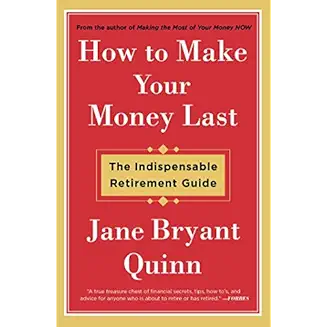
If you are over 50, READ THIS BOOK.
Buy it and keep it as a reference. 

My friend wrote a great blog post about bill paying that is the immediate inspiration for this post. She and her husband each own their own businesses, they have children, their financial lives are infinitely more complicated than mine, and she is infinitely more organized. But I need to be more in command and control in order to know what choices I could make. I'm making some strides in that direction.

Guess what? I have DATA. I have LOTS OF DATA!

I have automated almost all of my routine finances, and outsourced other parts of it. I started using Quicken twenty-five years ago, and I still use it. Once, it was just for record-keeping. Then, it printed my checks. Now, almost everything is paid on-line. Every bill that can be automatically debited from my account or my credit card is automated. My paychecks reliably get deposited every two weeks. I manage cash flow by manually making the credit card payments, timed to be able to pay off completely. The most manual thing I do is withdraw from savings by check from the credit union in my office building and walk that check across the street to my bank to deposit it in order to cover my credit card payment.

With a reliable paycheck that exceeds my daily and routine expenses magically going into the bank regularly, I have never had to have a budget. I have been prudent in big expenses and unconscious and casual about little ones. After a splurge, I slow down on discretionary purchases until I feel in balance again. I have saved money every single year of my professional working life, with two exceptions.

Twenty-five years ago, I had a couple years of living bigly. I took up photography as a serious hobby, bought a serious camera, and then a second and several lenses, and capped off a year of intense learning and study and practice with a several weeks-long photography field trip with the Sierra Club to the far north slope of the Alaskan tundra. Fabulous in every way, but it was the first time I had ever been in a small plane. I was infatuated with the freedom and the view. I signed up for flying lessons the day I got home from the trip, and a few months later was licensed and most of my social life was hanging at the airport and flying to places just for the fun - and for the photography. It settled down into ongoing expensive twin hobbies, but one that was financially feasible, after the initial splurges on equipment and training.

The second time I spent more than I earned was the year my sister died, when without thinking I paid cash for her funeral and largely supported the family until they got back on their feet. Glad to do it, no regrets, and look where we are now!

But now, I need to figure out what it would take to live without a paycheck. Worklife has not been financially a bed of roses forever - I worked for two private sector companies that each set a record at the time for their spectacularly large bankruptcies; they turned their pensions over to the government. In fact, the bankruptcies were largely designed to do just that. Thank goodness for the government safety net provided by the Pension Benefit Guarantee Corporation. It doesn't make us whole for the promises my former employers made, but it helps. For many people, it is the difference between poverty and not. For me, at these companies some few years each towards the beginning of my career, it is a very useful leg up.

So with twenty-five years of records in my computer, I have a lot I could do with the data. I think of graphs and charts as one way to write my memoirs, where my money went and what I did with it, and why- what was happening then? But I'm trying not to go down that rabbit hole of memory, but stay focused on what would be useful now:  knowing with some certainty how much money I need to live on. I need to develop a budget. I have lots and lots of information on which to develop that.

Besides being automated, I am very nearly cash-less. (In 2016, I only took cash from my bank twice!) Since small businesses have embraced credit cards, via Square and Paypal and other conveniences, I charge almost everything. Some food trucks don't even accept cash - they don't want to handle it. The only checks I write go to individual service providers  or small scale local clubs - once a lot of things for the kids like piano teachers and therapists - but now pretty much just my dogwalker (who does take paypal but strongly prefers the checks for the bigger net) and my sailing club. That means, via Quicken, I know where every penny is going.

I also use Amazon a lot. Did you know you can download a list of your Amazon purchases? I use automated Quicken categories for my credit card transactions, but "Amazon" could be any of several categories. So one recent project was matching my Amazon purchases for the past couple of years in Quicken with my downloaded list of transactions and putting more accurate categories on them. Looking at all my spending for the past couple of years gives me a much better picture of where my money is going and what is truly necessary. It allows me to think about how I could prioritize if I were to cut back.

I'm wondering about analogies to dieting. The first step towards eating right is to be mindful and aware of what you are eating.Serious focus on that requires writing it down - tracking every bite. Because I've automated the wazoo out of my money, it is frictionless and I have not bothered to be mindful. Just looking at the history has made me more conscious of what I'm spending as I'm spending. I know many people use cash as a conscious budgeting tool. I don't think I want to do that, but I could use tools like Quicken or Mint to more actively and even daily review what I have spent and what I want to spend on next.

Hmmm.... how to use my data analysis tools and learning from weight management to make me a better financial manager?