Monday, March 6, 2023

A Year (+) of Intuitive Eating

(Note: to see this graph on a phone, turn horizontally.) This is my weight graph from 1988 to the present. The actual pound numbers are deliberately left off, but the horizontal grid lines are ten pounds apart. The blue horizontal line is my aspirational "goal weight" (to which I no longer aspire) and the red horizontal line is where my body seemed to have settled during late middle age, and where I'd be thrilled to get back to. See how my weight shot up faster than ever in 2022, when I first read "Intuitive Eating".

I first wrote about Intuitive Eating (The Thing) back in January a year ago. I revisited it later that month, and then, in May, wrote a "Fuck You, Intuitive Eating" post.  I had gained more than 15 pounds, and was was extremely annoyed with having done so. Never-the-less, I didn't reject everything the book, and the approach, had to say. I had made some changes, learned some things, and it has stuck with me.

I pretty much spent last year telling myself I was going to ignore my weight and focus on activity, as a way of being more fit and stronger, not as a way to lose weight. I've had some physical challenges, from my knees and my back and getting covid, so my progress is not what I'd like it to be. But I don’t want to ignore my weight any longer.

The Intuitive Eating principles are good, and there is nothing in them I will disagree with. To refresh memories, here they are: 

  1. Reject the Diet Mentality
  2. Honor Your Hunger
  3. Make Peace with Food
  4. Challenge the Food Police
  5. Feel Your Fullness
  6. Discover the Satisfaction Factor
  7. Cope with Your Feelings Without Food
  8. Respect Your Body
  9. Exercise: Feel the Difference
  10. Honor Your Health: Gentle Nutrition

But the implementation seems to wander into territories I do disagree with. I joined a Facebook group specifically aimed at beginners to IE, with moderators and others answering questions. There, IE seems to be based on these ideas:

  1. Few people actually lose weight on diets.
  2. Of those who do, almost all gain it all back, or more.
  3. And so, don’t bother trying to lose weight. It won’t work.
  4. All food is morally equivalent and emotionally equivalent.
  5. Any restrictions on what you eat will inevitably lead to boomerang overeating. 
  6. Eventually, if you just eat what you want, you will naturally eat well. (But not be skinny).
  7. Weight cycling can be worse for health than being fat.
  8. It's possible to be healthy and fat.
  9. The medical system will blame ills to being fat rather than treating the actual illness.
  10. Any suggestion that being fat is bad for you is fat shaming.

There is truth in all of these, but they are not irreversible laws of the universe. My own personal experience challenges the first two points: I lost over forty pounds twenty-five years ago, and yes, I gained it all back - this year - twenty-five years later! There is no question in my mind that my life has been better in many dimensions because of twenty-five years of weighing less. I could move better, wear nicer clothes, achieve more social and professional acceptance, all because of weighing less. Much of this is societal, not health, oriented, but hey, I live in this world and that stuff matters. Were my health outcomes better? I don't know - I have had back and knee problems, and migraines, all along these 25 years and I don't think it's all tied to when I weighed more.

One more point to rag on IE folks: all foods being morally and emotionally equivalent. Not ever going to happen. I know things about food, nutrition facts, yes, but also facts about their origin and their impact on the planet and things living on it. Also, I do have some decades of having memories tied up in foods. So not all equal, no way. This is where I got into some arguments with the folks on the IE forum. Some are intransigent on the topic "All food is processed, even if it's to pluck from a tree and brush it off before biting it. So there is nothing wrong with processed food." This is where the cult comes in. Can't argue with cult members.

So what have I learned from IE?

I deliberately sought out and ate foods that I have been avoiding, more or less, for the last twenty-five years. Specifically, bread and pasta. Sweets too, of course, but more so bread and pasta. And guess what?  I still could have a love affair with the white flour products. They still taste good, sometimes wonderful. But making them an everyday part of most meals does not feel good to me. They taste good, and my body feels fine right afterwards, but I am very aware there is a longer term reaction to them. They make me crazy and I want more and more. This is over the long term, hours and days. If I eat them daily, the urge to eat more and more stays permanently. So, surprise surprise, the way I ate twenty-five years ago, steering away from the bread and pasta, is the way I feel better. 

So here’s what I’m thinking. When I get a carb-type craving, I might go ahead and make pasta or bread, but I might also steer towards beans, peas, eggplants, other roasted veggies with a sauce... I can get the immediate soothing fullness from those foods and I'm more likely to skip the craziness later. This is a useful learning, and helps me avoid the rebound/rebellion effect from simply saying "I can't have them". But if I really want them, I can have them. I keep bread in the freezer and pasta in the cupboard. (As an aside, the jury is still out on oatmeal. I started making steel cut oats in the instant pot, and eating no more than half a cup with toppings for breakfast. Unlike most starches, it didn’t result in early insistent hunger pangs in just a couple of hours most days, instead carrying me to a late lunch if necessary. So I may keep oatmeal in the breakfast rotation for a while.)

The IE folks really want you to throw away your scale. Not going to happen. Not when I've got 25 years worth of daily data to look at! But my scale is wifi connected - every time I step on the scale it stores the data on the web. I covered up the number display with a post-it note, and I would go a while -weeks - before looking at the numbers to see where I am. That's how I know that I gained 15 pounds. I didn't look at the numbers often, but I was aware I was gaining. I just didn't care. Much. I cared (and still care) much more about clothes, those that grew tight and then stopped fitting at all. Sigh. Some of that is comfort, and some of it is looks. And some of it is being cheap and not wanting to buy new things when I liked the old clothes. I took the cover off my weight display and watched it every morning for a while, and then I decided I prefer to cover it up and instead think about my weight when I want to think about it, not routinely first thing every morning.  But I like knowing the data is there when I want to look at it.

The folks in the IE forum constantly remind us that IE is not the "hunger / fullness" diet. Too bad. I think understanding and acting on hunger and fullness are critical for me to be the healthiest I can be. I've been pretty internal lately about why I'm eating what I'm eating, when I eat it. I still have to fight the urge to always clean my plate, and I’m avoiding that issue by dishing out smaller portions with full understanding I’ll go get more if I feel like it. Sometimes I do, often I don’t.

One thing the IE folks get right is that it is OK to eat to soothe yourself. Feeling your emotions fully is important, but it's also ok to soothe yourself with comfort foods. And to avoid feeling deprived, to avoid the boomerang effect, go ahead and eat those things you are obsessing over. The basic premise, that eating Cheetos for dinner one night isn’t going to kill you and you shouldn’t feel pangs of guilt over it, is absolutely true. But Cheetos are a food that is specifically engineered to overcome the body’s wisdom (ie intuition) and so if they are a regular part of the meal rotation, simply tuning into your body to see if you want them is not going to give a good answer. It was in this Cheetos discussion that I decided I had to part company with the IE folks who keep saying all foods are equally good. No foods are inherently bad, but that doesn’t make them equal.

A word about sweets, candy, cookies, cakes. After I eat dinner, I want something sweet. There are some things that most days I can (and do) eat just a bit of and be done- Dove dark chocolates, Gin-gin ginger candies. Other things, cookies and cakes and ice cream, I’m going to want to eat a lot of. So I’m not banning anything, but for the time being I’m less likely to buy those other things and bring them home. I’ve found it relatively easy to pass them up at the store, or even in an unopened box at home. If I want them, I’ll eat them and that’s that. But I don’t want to munch casually and mindlessly, so I’ll make it just a bit more difficult to get them. If I could buy just a quarter cup of Jeni’s splendid double dark chocolate ice cream, I would, but sadly it comes in pints and I’m not tuned in enough to stop at a single small scoop from the larger container. Most days, anyway.

So that’s where I am. I am going to try to lose weight, by modifying what and how much I eat, though not drastically and not obsessively. And the focus on physical activity and trying to get strong remains more important to me than the weight.

Tuesday, February 28, 2023

Language

  "I'm getting used to a slower pace. I have found within myself a deep well of laziness. Or perhaps it's peace. Yes, let's call it that."
-- Louise Penny (a favorite of mine, author of the "Gamache" murder mysteries set in Quebec)

My days have definitely slowed substantially. Just thinking of how I used to go to work, spend the whole day engaged with complex ideas and difficult people, and then take care of two houses and three kids exhausts me, I have to sit down and rest for a bit. I move calmly through my days, with a few routines that rise almost to ritual level at the beginning and end of each day. It is not unusual for me to have a day when I don't talk out loud to anyone else except the dog. (I'm not lonely, I'm in contact and connected as much as I want to be, but that is not the point of this post.)

My house is rarely silent. I almost always have music or a podcast or a book playing, either background or foreground depending on what else I'm doing. I am sometimes very engaged mentally with what I am reading or listening to, sometimes challenged. But I feel that most of my time is not spent on things that mentally challenge me. My focus has been on dealing with physical challenges, working out, walking, home improvement and gardening projects. Got to exercise and tend my mind as well.

I am somewhat involved with a couple of local civic and environmental organizations, and that draws me into using those old skills, of reading, analyzing, synthesizing, and writing / saying what I think about it all. It feels good to get into it! But, I'm not prepared to step up to doing anything like this full time, or even more than the very little I'm doing. 

I've never been a fan of word games and puzzles. I have never clicked with crossword puzzles, or scrabble. I've not jumped on the Wordle craze (though I enjoy how others enjoy it, especially the sharing). I've finally settled on foreign language learning, at least for the present. I do Duolingo every day!

Duolingo is a very popular free/premium app that offers many foreign languages to learn (including English as a foreign language). I downloaded it years ago with the idea of brushing up my French before a trip. I had French classes from fourth grade through college, and then studied it again for several years while my sister was living in a Francophone country. I achieved what felt like basic reading fluency, reading some Jean-Paul Sartre in the original, occasional technical documents at work. For speaking, I needed a few beers in me (always available when visiting my sister overseas) and French seemed to trip lightly off my tongue, and I caught the gist of other's conversations. But Duolingo started at the very beginning, and it quickly became boring to me and I didn't persist.

I tried Duolingo again a few months before a trip to Italy. I was starting Italian from scratch, and for about three months I gamely plowed on, doing just a couple of lessons a day. The result from my trip was I had enhanced my reading vocabulary with a few specific words and phrases that helped a bit in navigating, but I had no listening or speaking ability. 

When I got home from a trip last summer, I was physically beat and was sitting around the house much more than before. I re-downloaded Duolingo and picked up French again - it remembered me, and I picked up where I had stopped years ago. I found the gamification of it very satisfying - the nice little beeps and the characters that pop up to cheer you on. It also had an option to test out of lessons, skipping some of the tedium of things I already knew. I quickly got to levels where I might already know something, but the progression was not mapped to what I knew, so every day there would be something new as well as drills that made me recall old words and grammar learned years ago but not used since. 

Duolingo has both gamification and social aspects, that are not dependent on what language you are studying.You get points, and little beeps and trumpet blasts when you do well - I am amazingly fond of the tiny positive reinforcements, silly as they are. Some friends of mine are using Duolingo daily as well, and I enjoy the casual camaraderie of seeing what milestones they have crossed, and sometimes working together to knock off, say, 50 perfect lessons in just a few days, in a friends quest. In addition, you are automatically put into leagues with competition among the members to earn the most weekly points and advance to a new league. 

The lessons, which I do on the ipad, have written, listening, and spoken aspects. There might be a written sentence in English, for example, and you have to either sort through a gallery of possible French words to translate it, or fill in a blank in an otherwise complete sentence, or, hardest of all, type out the whole complete sentence in French. Did you know that there is a French keyboard, with the letters in a different order that our querty keyboards? Since I'm using a screen (software generated) keyboard on the ipad, when I'm in French lessons in Duolingo, it automatically switches! That slowed me up for a while! Other lessons include translating from English to French, and listening to spoken French and translating to English or replying in spoken French.

Now I've been doing Duolingo for more than 200 days in a row! But I have to caveat that - you can earn or buy a "streak freeze" where it automatically bridges (forgives) a day or two missed. I've missed a few, but not many. I've currently got five days worth of bridging in the bank, which will come in handy when I take my offshore sailing trip, with no cell phone coverage available for as much as two weeks. Lessons can be stored and taken offline, but I don't actually know how that works, since I haven't tried it. 

I discovered back in my youth that a default setting in my brain is to process words as normal (ie English) or foreign. It is very easy to mix up different foreign languages, and so I decided to stick with French at the outset, worried that my brain was too old to distinguish a new foreign language from French. I very briefly tried Greek before going to Greece this fall, and quickly gave up with the extreme foreign-ness of it. It had a completely different alphabet to add challenges. I tried downloading a basic Greek language learning audio lesson, but after several days in my car not getting farther than "Hello" "How are you?" "Thank you very much", repeating over and over, I gave up. 

I think I have audio processing issues, related to my hearing loss. When I was first diagnosed, I was especially bad at distinguishing speech with background noise, exponentially worse when the background was other speech. I even asked my team of peers and subordinates at work to make sure they never whispered in my ear in a meeting - I totally lost the thread of both the main conversation and what they said, and got irritable. My audiologist told me that is classic, including the high level of irritability for what is really a minor annoyance. (I was able to process written notes passed to me during meetings, it was the audio processing that didn't work.)

So my expectations about learning enough French to be fluent in a conversational way is very low. I really enjoy the lessons, but they are more puzzles to me than conversation. I will think about the word order, clues to conjugation from other words in sentences (plural? feminine?) and it feels a bit like coding / decoding, rather than smooth flow of language. But there is a great deal of repetition - so some sentences start to roll off my tongue more smoothly, and perhaps there is hope for me talking "il faut partir a l'aeroport vers quel heure?" (around what time should we head to the airport?). But understanding the answer will be hard!

I've sampled some podcasts labelled "slow French" and they are sometimes understandable. If I really wanted to become more conversational - if I thought I was going to be in a Francophone environment for a while - I think that would be really helpful. I remember once going to a church service at Notre Dame, and understanding the the slow and clear sermon. I could sometimes follow French speech at technical conferences, when the speaker was making an important point and so slowed down and put more weight on the words. I also believe that deliberately exercising my audio processing faculties, rather than retiring them, might be a good idea. So I do very occasionally listen to the slow French news.

But I've added more puzzle challenge by starting up another new language, Norwegian! I have absolutely no illusions of ever becoming even slightly fluent in Norwegian. But it's actually a very easy written language for me to learn, so far. (I'm on Unit 3 in Norwegian, compared to Unit 52 in French. Every unit is many lessons, maybe 50?)  I was intrigued to see the Duolingo characters and personalities they use are the same (Lily is still a violet-haired disgruntled teenager), though of course the voices are different, but the building of the vocabulary and sentences are very different! "Ulven spiser anden" (The wolf is eating the duck) "Bjornen drikker noe" (The bear is drinking something). So funny! I do miss having a reference to look some things up. I learned the difference between "a wolf" and "the wolf" by context ("En ulv" versus "ulven"). But some words use "en", others use "et" or "ei" and I don't know what the difference is, I'm just memorizing which to use when a new word comes up. I will eventually find a way to figure it out, but leaving the app to research it is annoying.

But I am learning, stretching my mind and my memory so that I didn't need to look up those Norwegian sentences above! Hopefully, I'll never need to say those particular sentences, but I have the words in my mind. I know what an enormous luxury it is to have the time to do this, from five to fifty minutes a day, averaging around 15 minutes. It makes me feel I'm doing something. Let's call it peace.

Sunday, January 29, 2023

Adventure

So, I'm doing a thing. I'm a little bit nervous. No, I'm a LOT nervous. But I want adventure.

I'm going on a TWO WEEK VOYAGE aboard Pride of Baltimore II, my schooner. They posted the itinerary Wednesday, I slept on it and signed up Thursday, and I have to pay by Monday. And the trip begins March 15. That's right, March. Before the first day of spring, even.

We're going from Baltimore to Saint Petersburg, Florida. That will be down the length of the Chesapeake Bay, out into the ocean, around Cape Hatteras, down along the South Carolina and Georgia coasts, along Florida and around or through the Keys, and back up into the Gulf of Mexico to St Pete. It's about 1400 nautical miles.

The way these voyages go, they set a longer than absolutely needed period of time to make the trip, and then study the forecasts and actually do the sailing in the best weather window. I figure at only six knots, it's about 10 days, so there is a lot of room for adjustment at either end. Probably, once we set off, we pretty much stay out until we get there. No stops are planned along the way. And for a ship the size of Pride II you can't just pull into any marina along the way for a break. I understand any impromptu stops are generally anchoring rather than tying up to a dock somewhere. I'll book my flight home in a refundable way, because it might need to be changed based on what we do.

When we get closer, I'll be able to refine what clothes I need based on the weather. But it'll be winter, and colder on the water, so bundling up for the first week seems in order. Then, Florida in March? On the water? Mild, not freezing, but not hot by any means. Layers. And rain gear. And nylon undies so I can wash them out - no laundry on the boat, and two weeks is too long to pack for. 

Six weeks from now, I can be a little bit stronger than I am today, and I actually feel pretty good today. But this is a very big kedge to help motivate me to action to stay strong! I know I can do the basics aboard, up and down ladders, standing and sitting around, holding the wheel, pulling on ropes, coiling lines. In the unlikely event it gets really rough, I'll opt out of anything that makes me nervous. But the stronger I am, the better off I'll be. 

Yippee! Looking at the photos from previous trips are making me smile!

Saturday, January 28, 2023

Five Things for 2023

Snapped right after a new color in the hair.
Also shows the hips, as big as ever!
The month is nearly over, but I'm finally getting around to sharing some of my notions for 2023. I like to use milestones to take stock and think about changes, whether or not they fit the mold of "resolutions", and whether or not you are doing it at year end. So here I am. New hair and all.

I am very influenced in how I'm doing these things by Gretchen Rubin and her podcast, "Happier". For several years, she and her sister have been promoting ways to think about what you want to accomplish and tools to get that done. So some of this is borrowed.

There is not a word about weight here. I've tied with the highest weight of my life. I can't say I don't truly care, but it is not my focus right now. What is my focus is getting stronger and getting out there and doing things.


  1. Word of the year
    Funny, this word just came to me yesterday. I'd been mulling it over, various iterations of how to describe being more active in a single word that would resonate. Maybe because it's movie season, it finally clicked: "ACTION!". Less sitting on the couch planning to do things, more actually doing them.

  2. Outside 23 for 23
    This is pure Happier podcast. For several years, they have been promoting a specific action to be done for a certain amount of time every day for the year. They did things like "walk 20 minutes in 2020". This year, it's be outside for 23 minutes every day in 2023.  There are so many benefits to being outside, proven often. And, one is more likely to do things outside if you are trying to be outside anyway.

    The only rule to participate is there are no rules - just do something that is meaningful to you. So passing between house, car and stores can count if you want it to. I had a very low energy day where I sat in the sunshine in back wrapped in blankets watching Bixby. Definitely counts.

    I have to confess that despite the lax rules, by any construction I have failed at this three times already this year. Each of these was a nasty cold day with solid rain and wind. Still, I think I can do better. I do have a covered front porch - I could swaddle in blankets and sit out there. Even better, I have rain gear, and it works.

  3. Minimum Baseline
    This is an idea I got from a running coach. She used in the context of "every run feels like crap as you start". And so the idea is to get out there and tell yourself there is an absolute minimum you can do no matter what - even if it's just put on the running clothes and jog 100 yards. In my case, it's not about running goals, but overall activity for the day. I've tracked my daily steps for more than a decade. For the past several years, in addition to looking at monthly average steps,  I've looked at the metric of how many days had fewer than 5,000 steps. If you look at my previous report card post, you will see that December had 15 days where I walked fewer than 5,000 steps! That is an all time high! An all time low for sluglike days! Without an office to go to, and with fewer and shorter dog walks in the works (see below) I do have to work at 5,000 steps. But it is ridiculous to be that inactive. I do need to walk my feisty little dog. In addition, while I did succeed in getting rid of my treadmill (yay!) I still have my little trampoline. That gives me about 1,000 steps for every 10 minutes of bouncing. Bouncing is definitely a workout - generally gets the heart rate up higher than just strolling. That is my backup if it's a nasty day where neither the dog nor I want to go out.

    So I've only had one day so far this year where I fell below 5,000 steps in a day. I think what happened is that it was a nasty day, I was thinking I'd get a chance to bounce my way to the finish line, but then I discovered I had to be on the phone or zoom from 5 pm to 9 pm. When I finished with talking to people, I was 2,000 steps short of the goal and not prepared to work that hard for at least 20 minutes instead of going to bed.

    But having been caught up once, now I'm alert to this. I can manage my time better and make sure this particular trap doesn't catch me again.

  4. Bixby Training
    Bixby is the snuggliest dog in the world, for me. But he is very barky. He lives in a high state of arousal, which is not good for him nor for me. He can get into a barking frenzy, and he moves into Rumpelstiltskin mode where I think he will simply explode if he doesn't stop.  (He appears to have a very solid bite inhibition so I don't think there is any danger, but it's a lot of barking and lunging.) I am working on training him out of this. I have known general approaches to this for years, but I've decided to really buckle down and work on this right now. Very specifically right now, I'm working on the leash reactivity, rather than a big focus on the home barking. My trainer recommended to pick one where I can be consistent and focused. I decided that right now, it's more important to me to be able to take him on walks than to calm him down in the house.  During this time, it's better to avoid ever getting him over the reactivity threshold when we're out on the leash, so it's close to home, with a full pouch of very high value treats, and a close eye on what is going on around us. I believe I'm making progress with him. Today, I took him down into the park (at 7 am!) for the first time in a while. I was able to keep him calm the whole time despite seeing some dogs from a bit of distance, but he was very near the threshold when we got home. But, progress!

    So I also am striving for a Bixby minimum baseline, on leash and off our property for at least ten minutes every day. More short sessions is better than long ones like today's more than 30 minute walk.

  5. Have Adventures!
    I love staying home and reading about other people's adventures. But when I get out there and do something different than usual, I love it. My threshold for "adventure" is very low. A trip I took to a resort/shopping development in January for a couple of hours counts. Hiking in new places count. Participating with a bunch of strangers in an usual performance art activity will count, too, if it comes together. Actual objective adventure also counts!

Friday, January 6, 2023

Let's Put 2022 to Bed

 Let's wrap this puppy up. While I didn't do a lot of posting about the metrics of my life, I did keep up my spreadsheets and graphs. I find it is helpful to have a "just the facts" look at how my life is unfolding. Memory is unreliable, and these numbers tell a story.

Here is 2022 by month, and yearly totals for the last four years. In general, darker is better. 
I put migraines in red and reversed this (darker is worse).  And in the bottom (yellow) section, I'm not sure more is always better - more books, for example, is not always better.

 The whole overview of the year is above, complete with context from prior years. Looking first at the yearly trends, look at the first section - activity measures. It's been downhill since 2019 (when I retired partway through the year). But I managed to turn around the downhill trend on some of these things - 2022 was more active by some measures than 2021. This was and is a hard fought battle. I didn't bike at all, I ran one whole mile, but I did get out there and walk! But not every day, by no means. I had more low activity days (days with less than 5,000 steps) than ever before, by a fairly wide margin.

The next little section shows the sad story of my weight - after holding it steady for the previous three years, I put on fifteen pounds and tied with my previous all time high. Let's just leave that there for now.

The next section contains some measures of wellness. I fell off the formal meditation bandwagon big time, this year. I believe I incorporate moments of mindfulness throughout my life in ways I didn't before I started meditating, but I don't sit for a practice much any more. In fact, many of the times I show I meditated, I put on a recorded meditation in the middle of the night in order to try to get back to sleep. In good news, migraine hours continue to decline! Two months with NO MIGRAINES at all! Woohoo! Sleep is relatively steady, and resting heart rate bounced around during the year, but the overall average didn't change that much.

The last section tracks various enrichment things. Again, these are not necessarily the most important things, but are things that are relatively easy to track and do show some softer aspects of my life. I was a reading machine this year, I wish I'd seen more movies, I hardly blogged at all, and likewise I failed to enjoy the delights of the city and city friends. But I traveled a lot, and I got a decent amount of sailing in. 

I've found the story of the ups and downs of the year are best captured in a graph of my daily steps throughout the year.

The dots are the daily step totals. The dark blue line is a running monthly average, and so shows the longer term trend hidden within the noise of daily variation. The lighter blue line is a running weekly average, so shows a shorter term trend than the monthly one.

So follow along the graphlines to read the story of my year. We start with an optimistic and motivated January, with several very busy days, followed by a steady decline in late winter and early spring as the bad weather and my bad knees dragged me down. There were some high points, but the trip to the Utah desert in March was disappointing as the weather kept us in. The weather got better during spring in Maryland, and I went out to California in April and I walked my brains out. Back home, I tried to get off the couch to train for my trip to the Nordic Isles in June and July, but pretty much I just hoped for the best and as a result I failed to enjoy the trip as much as I could have. I overused my knees and was often in pain.

I vowed to do better for my planned trip to Greece. We see a steady increase in average steps, facilitated by cortisone shots in my knees at the end of August, and steady physical therapy during September and October. Greece went really well, until I got covid

So the rest of the year was in the cellar, with constant struggles to get off the couch and move. The month of December has the lowest average steps of any month in years. It also has the most number of very low activity days. So I went on some walks, but consistency is lacking.

Steps are clearly a proxy for overall activity, but I think it's a pretty good substitute. I know that studies have shown that there is a clear relationship between few steps and all-cause mortality. From 4,000 steps a day to 8,000 steps a day, there is a clear relationship where more steps and better health are very tightly correlated. This is a correlation, and there is NOT a clear demonstration that moving from fewer steps to more steps results in better outcomes. It could be that folks in an unstoppable decline walk less. Is there such a thing as an unstoppable decline?

I don't want to end on a sour note, so let me say that right now, in the beginning of January, I feel pretty good, and very motivated to keep moving. I know deeply that moving more makes me feel better - there can be a virtuous spiral upward. So let's leave last year behind us, with maybe a few lessons learned, and go forward to the new year.

Tuesday, January 3, 2023

Go As You Mean To Follow

We've had delightful weather so far this year (creepily warm). I'm taking advantage of it to get out there and walk. I plan (hope) to do a post recapping 2022, and share my current thinking about goals for this next year. I've got a little data collection to do for each of those, so I thought I'd start off by bragging about my streak (THREE WHOLE FREAKING TIMES IN A ROW!!!!) days of walking. None of these are marathons, but it's good to get out there at all.

The first, on a crisp and sunny New Year's morning, is my "normal" walk - the mile and and half that goes down to the creek and back up through the neighborhood. I'd like to make this my minimum.


The following day, Monday, I went up to check on the boat and took a walk in the county park near-by.

And today, I dropped my big boy off at the airport this morning, and went exploring to a new-ish development, National Harbor. I had never been there, though I think it may have been open for a decade. It's got a Gaylord Resort, a convention center, and a mixed retail/restaurant/residential development built as a brand-new playground along the Potomac River across from Alexandria, Virginia. It was drizzling, I moseyed along looking at things, I didn't stay long, but I'm glad I scratched my exploring itch at least mildly.

I think I'll post these on my Quick Log, and I'll pick up posting these kinds of things there.

Wednesday, December 21, 2022

My Year in Books


OK, I read a lot this year! I actually had a goal to read slightly less this year than last, but here it is, more than 200 books, versus my goal of 150. Last year was 185, and 2020 was 180. The reason I set a lower goal is because I believeI spend way too much time on the couch reading. I do some listening to books which allows multi-tasking, but more than 2/3 of these books were read, not listened to. And, most evenings end up with me on the couch playing idle nonverbal games on my ipad while listening, so not so much multi-tasking going on. I've got to get some new hobbies, or sign up for additional volunteering!

I read most of these books on the kindle (70%) and when I finish it, it posts automatically to GoodReads, simplifying the keeping track. I manually enter hard copy and audio books, though I'm not so accurate in getting that right. Still, I think this is pretty good. (Actually, I just found a half dozen Audible books I hadn't added but I just did; not reflected in these totals!) And, of course, GoodReads makes the graphic, and also allows exporting to excel to make your own statistics. 

Folks, I only acquired and read less than twenty books on my own this year - all the rest were library books or audio books! Let's hear it for the library! Especially because my habit is to find an author I like, and then read my way through the entire oeuvre. The digital service my library uses tends to have all-or-none of authors I stumble across. With ten spots for checking out books, and another 10 to join waitlists, I keep them coming. 

I grade on a curve, and I think that makes me a harder grader than many others. In fact, a quick scan shows my score is higher than average for only six books this year. I assume a book will have three out of five stars, and it needs to be very good or very bad to deviate from that. So the graphic above shows the only three five-star books of the year. Here is a quick recap of them:

The absolute BEST indoor plant book! And Christopher Griffin, the Plant Kween, is the cutest guy I know - I found him on Instagram before I bought the book. So this book is luscious in its photography, but serious in its plant information. Latin names, proper botanical terminology, very precise notes about care. But luscious! (Bonus for Brooklyn readers: It contains portraits of the best plant shops to be found in the borough.)


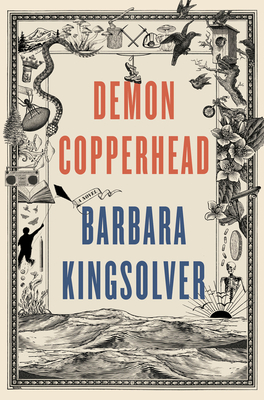
Written entirely in the first person, this is a sprawling and moving book. VERY faithful to David Copperfield, which I read as a child. I had to get a plot synopsis of the original, which was fun then to figure out the modern characters, though it did result in hints of spoilers. Most of the books I read this year, the typical mystery, takes maybe five hours to read. This was more like fifteen! But worth it!


The story of a woman enslaved by her father, and how her life evolves as her circumstances change. Very moving depictions of the compromises made to survive. There is an historical note at the end, showing how this is closely based in reality. Not so very far from here, in place or time. It really gripped me.


 I rated just two books at two stars. One was really a short story; it seemed to me to be just exploiting the popularity of a series and squeezing some extra and unnecessary and not very entertaining mileage out of it by tossing in this story. The other was an historical mystery set in England in the early nineteenth century, the first of a series. I didn't even finish it - very rare for me - because I couldn't handle the historical anachronisms and inaccuracies, right down to rich people routinely drinking water. (Water wasn't safe to drink.) When I checked reviews on GoodReads, it turns out many others also noted these problems.

 My book count is up this year partly because I read more books written for children and teens. They go quickly, and can be very engaging. The bulk of these were fantasy novels. I raced through a series, The Ranger's Apprentice, that basically eschewed magic for craft and skill to create fantasy adventures in a imaginary medieval world (with a million anachronisms). With two offshoot series (new characters, same world, some overlap) there were a total of 25 of them! 

I whiled away much of my Covid isolation by re-reading a fantasy series by Megan Whalen Turner, The Queen's Thief. The big idea is a world much like Greece in the sixteenth century, but with different geography and a different pantheon of gods. I had read all six books a while back (written from 1996 to 2020), but downloaded them to the kindle to take along with me to Greece. There are conflicts ranging from families to nations to international dynamics, as the "Medes" (think Ottoman Empire) continually try to take over the Greek pennisula, with the (European analogue) "Great Powers" on the other side maybe or maybe not helping out the three squabbling Greek kingdoms. Nothing is as it seems in any of these books, told from different points of view. I hadn't read the last book, and the others had been read so long ago I had forgotten a lot. (Hey! In double checking the dates, I just discovered a new book out this year! A collection of related short stories and trivia to supplement the series. Happy Christmas to me!)

Nearly half the books I read this year were mystery novels, many of those in series. (I don't distinguish between mystery, thriller, suspense, spy, and related concepts, just lump them all as "mystery"). There was a charming and lighthearted series by Rhys Bowen called "Her Royal Spyness". Our heroine, when we meet her, is 25th in line for the British throne, but penniless and having to survive by her wits. Downton Abbey meets Dorothy Sayers in the 1920s, with fifteen books in the series so far. The author is prolific beyond this series, but I've not really sampled her other stuff. A more hardboiled series I'm nearly caught up with is the Walt Longmire set, by Craig Johnson. He is a sheriff in the least populated county in Wyoming. The descriptions of the physical landscape are gripping, and many of the characters are Native Americans, as there are a lot of tribal lands around. There is a TV series out, Longmire, inspired by these books but not at all a literal translation to the screen. I watched just the very first episode, and put it on my ever growing "to watch when I have time" list. My favorite mystery writer ever, Louise Penny, had a new volume out from her Inspector Gamache series which I devoured in previous years. The latest is one of the best ever. There is also a brand new television series, Gamache, out as of early December, again inspired by the books but not a literal translation. I've watched the first two episodes, and will watch the rest of the 8-episode season soon. 

There isn't a clear line always between fantasy and science fiction, but I do try to break them apart. I'm drawn to these genres because, as long as you are making things up, you can create a really appealing world, one I might like to visit. Many of my science fiction reads come from John Scalzi's blog, where he devotes space to allow authors to promote their books by talking about what they were trying to convey in the book ("The Big Idea"). An author I stumbled onto from the blog, Becky Chambers, is fabulous. The first book of hers I read is set in a universe she uses for several other books, but she focuses on different characters in wildly different settings. My favorite of this year (4 stars!!!!) is The Galaxy, and the Ground Within. The story takes place in a hospitality rest stop for interstellar travel, where a half dozen characters from different species from different planets are stuck together during an unexpected delay of undetermined length. Complex tensions and interactions ensue, but they all pull together in the end to save an endangered child.

An unusual book I read (also tipped off by Scalzi's blog) might be in the mystery genre or in the fantasy genre. The Peacekeeper, by B.L. Blanchard. It is set in an alternate world where the Americas were never colonized, and the Ojibwe nation surrounds the Great Lakes. There are crimes and mysteries, but "justice" is different in a society where restoring harmony is the main role of peace keepers. The physical description of an Objibwe Shikaakwa (Chicago) reminded me of the Afro-futurist vision of Wakanda, but with a Native American orientation. Refreshing! And a very good contemporary novel, Firekeeper's Daughter, by Angeline Boulley, is also set in Ojibwe culture, but in our world. Another hat tip to Scalzi's author's platform.

I read four books by Connie Willis, which share a common plot device - time travel is possible and Oxford University sends back scholars and historians to view historic events. Two are WWII in England books, one mixes WWII with a lighthearted take on Victorian England based on the Victorian book Three Men in a Boat by Jerome K. Jerome, and one takes us to the Black Death. They are entertaining in different ways, and transporting a contemporary observer to these settings makes for interesting situations. Recommended.

OK. Time to investigate new hobbies, other ways to spend my time.